5 Tips for a Creating a Collected Home That Still Feels Intentional
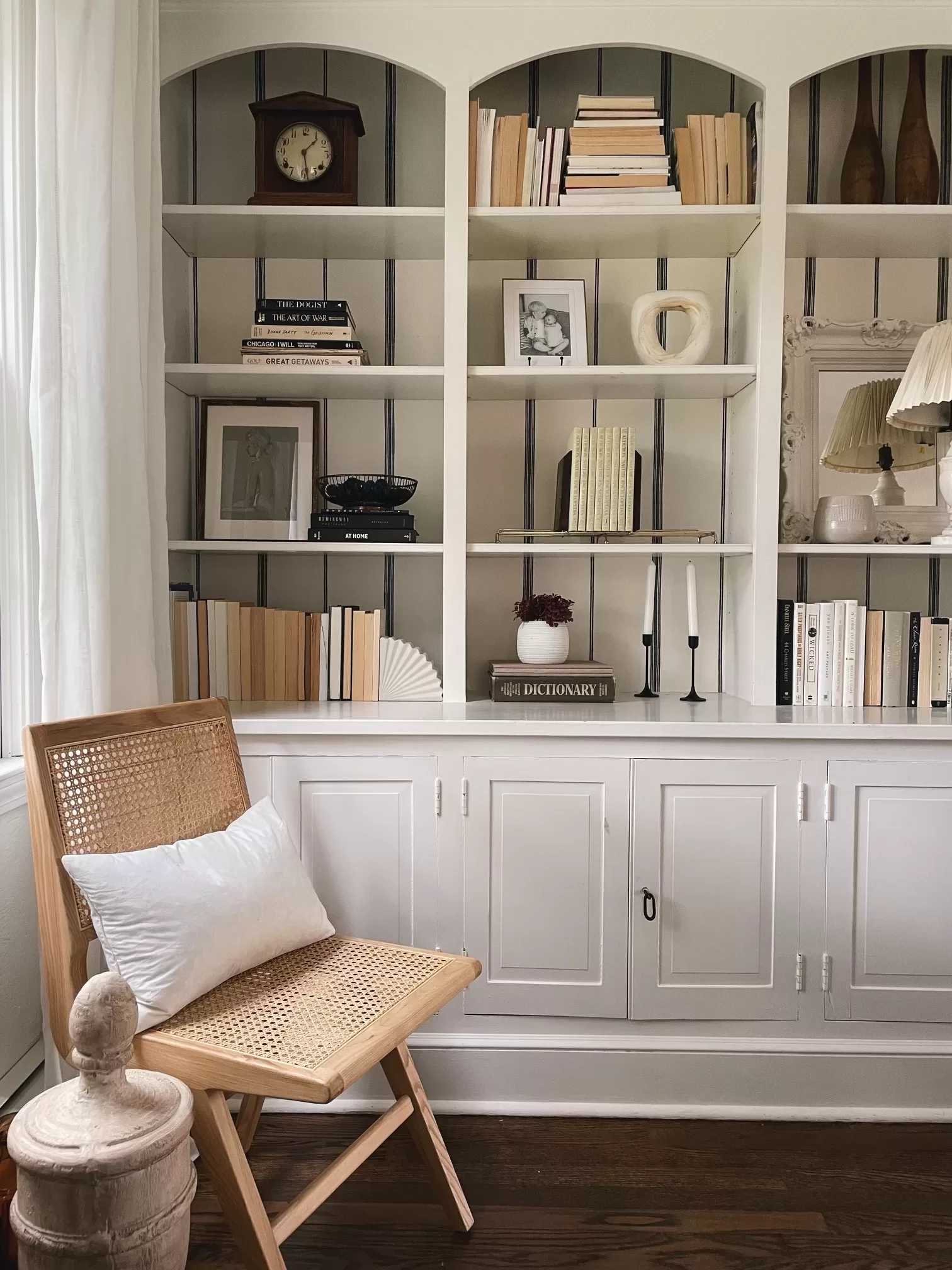
I’ve always been drawn to homes that feel collected rather than perfectly done. Spaces where everything is brand new, perfectly coordinated and a little too “just right” can certainly be beautiful, but they rarely feel warm or personal to me. They tend to read more like showrooms or catalogues, while layered homes feel lived-in, inviting and individual.
They’re also much more fun to decorate, because you’re never really finished. There’s always a reason to visit a flea market or estate sale, bring home something unexpected, and rearrange a shelf, wall or corner to make room for it.
Would you like to save this?
The tricky part is that a collected home isn’t quite as effortless as it looks. You can’t just bring home everything you love and expect it to work together. The best layered spaces still have restraint, repetition and a sense of harmony, so they feel intentional rather than like your favorite antique mall exploded into your living room.
If you love that collected look, these are some of my best tips for getting it right.
Choose a general style direction, but don’t overcommit
The key to making a collected home feel intentional is having a clear style undertone. You do want a point of view. You don’t want a formula.
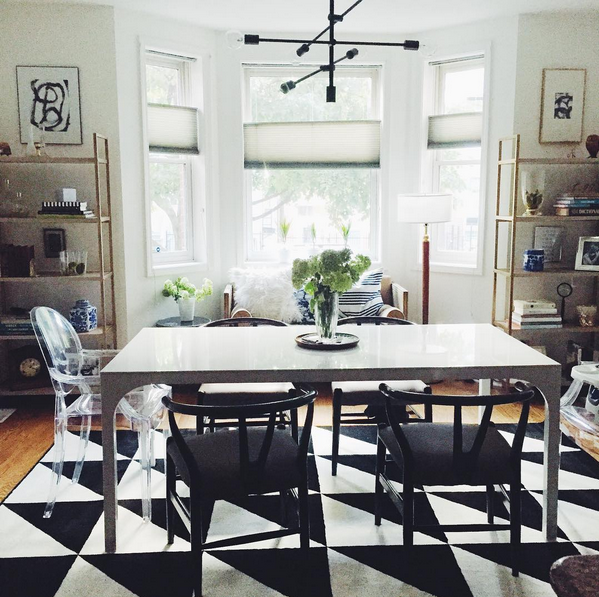
If you love midcentury design, for example, maybe half of your furniture leans clean-lined and simple. If you’re going for more of a coastal-grandmother look, perhaps your foundation is slipcovered upholstery, pale neutrals and natural materials.
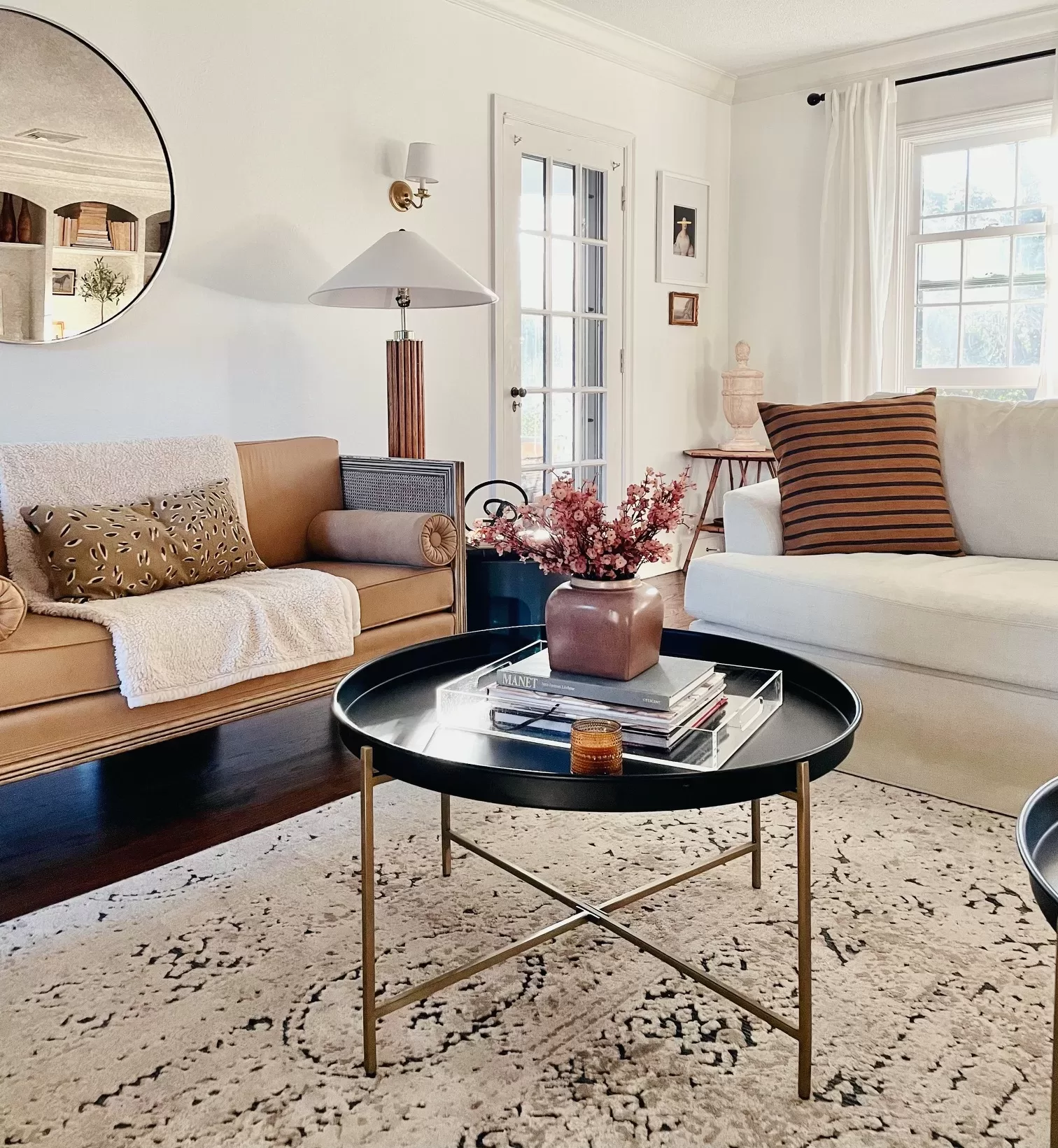
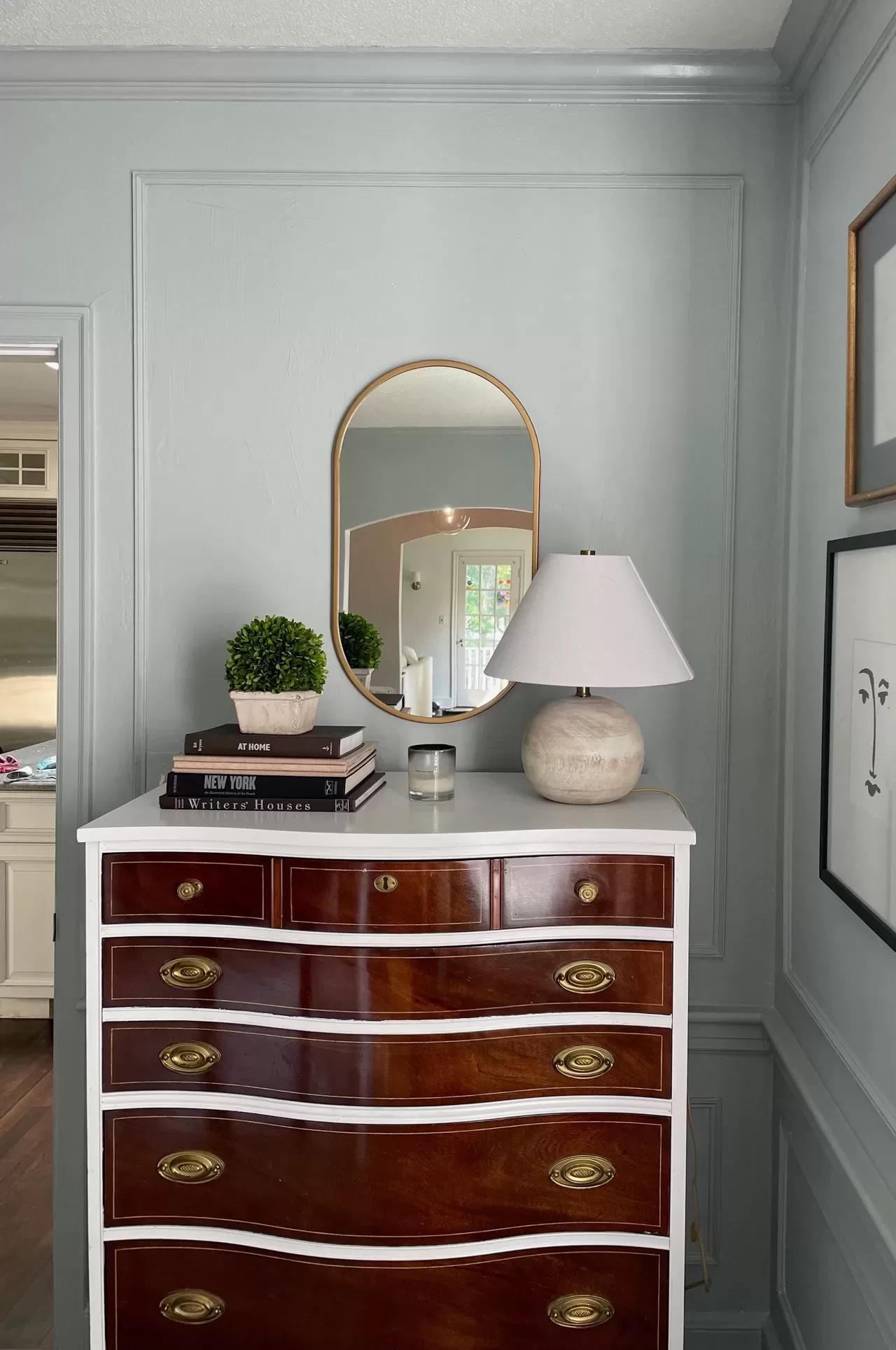
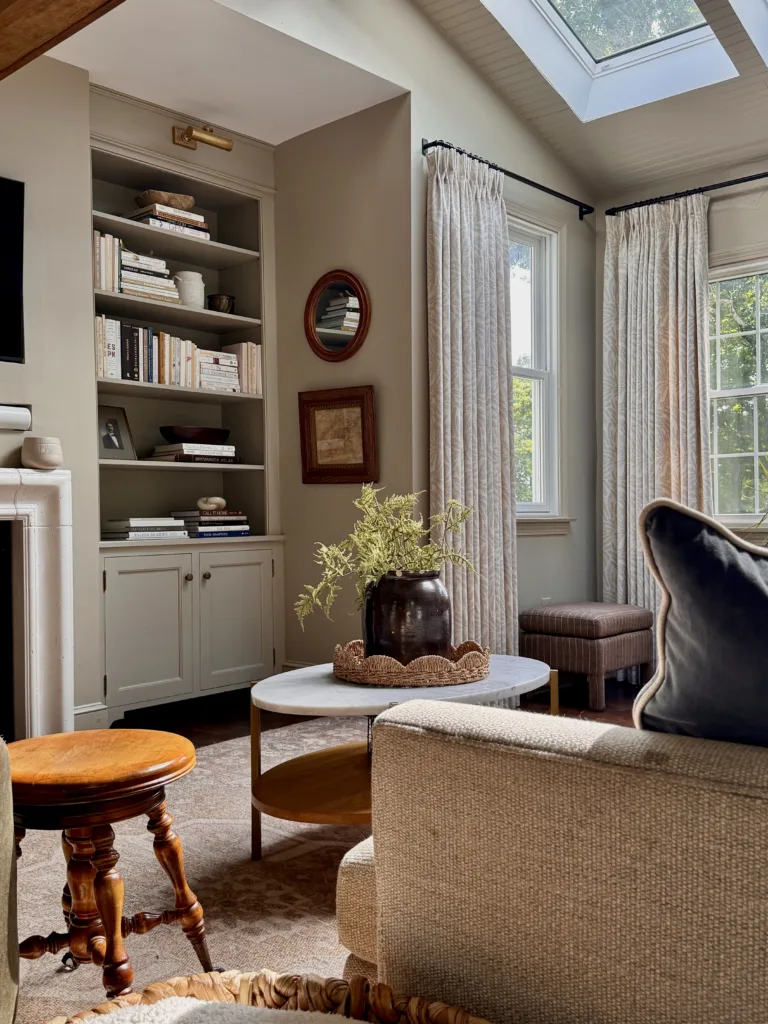
The important part is not to carry that style through every single piece. Leave room for furniture, art, lighting and accessories that don’t fit the core look exactly. An antique chest in a mostly modern room, a contemporary lamp next to a traditional sofa, or a rustic stool in a polished space can keep the room from feeling overly coordinated.
A good rule of thumb is to let one style set the foundation, then use contrasting pieces to add personality. That gives you enough consistency for the room to feel cohesive, while still leaving space for the layers.
Mix old and new
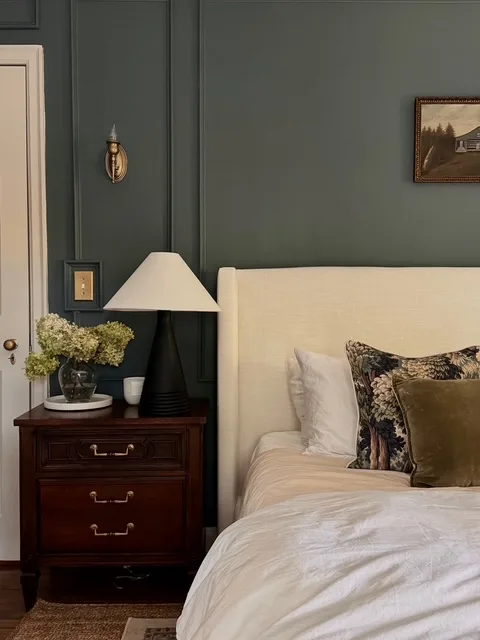
Just like a mix of styles, a blend of old and new pieces is essential to a collected home, because each does a different job. Newer pieces keep a room from feeling like the cliché version of “grandma’s attic” or a thrift-store basement, while older pieces keep everything from looking like it came from one showroom or catalogue.
There’s no perfect ratio, but I’d generally aim for somewhere around 50 to 75 percent newer pieces, with the rest made up of vintage or antique finds. And when I say “new,” I don’t necessarily mean newly purchased. I mean pieces from roughly the last decade or so that have a more current shape, finish or feel. It’s perfectly fine for those to be secondhand, too.
If you’re just starting, casegoods, mirrors, art, lamps, stools and small tables are some of the easiest pieces to buy old (I also pasted a list at the bottom of this post). Upholstery, mattresses and heavily used family furniture are often where newer pieces make the most sense.
Add a few things that feel a little “off”
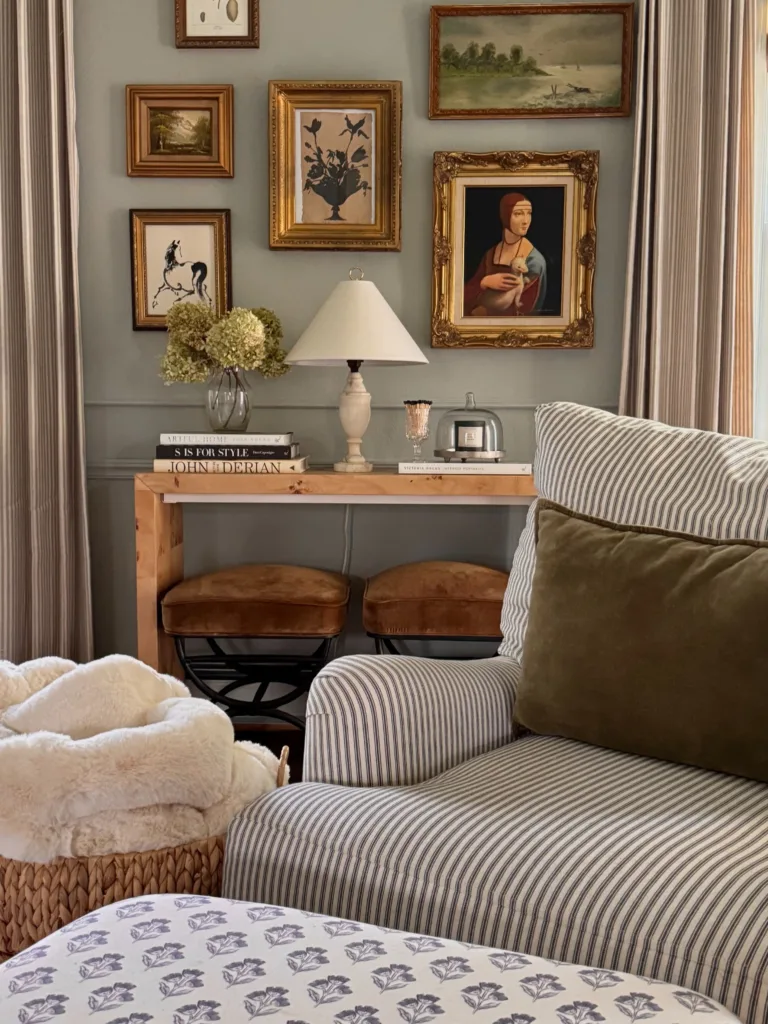
One of my favorite tricks for making a room feel more collected almost instantly is to add something that doesn’t quite belong.
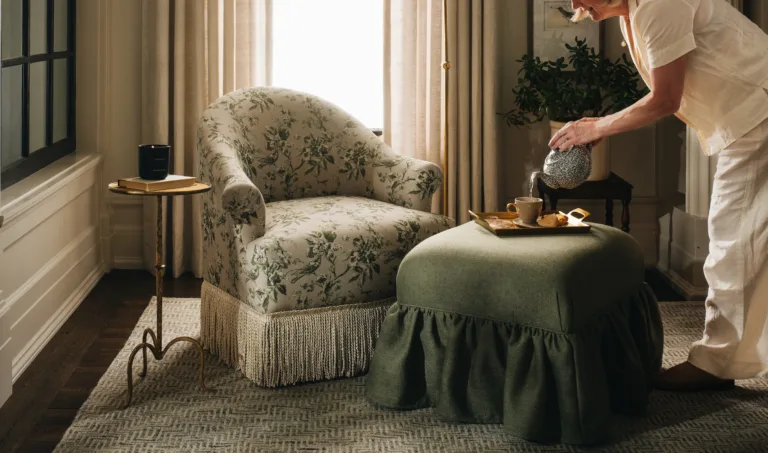
I don’t mean something that clashes completely, like a neon yellow throw pillow in a Nancy Meyers-esque room. Just something that’s a little unexpected or odd: a primitive wood stool in an otherwise polished corner, a modern piece of art over an antique dresser, an oversized (or undersized!) lamp.
If every piece in a room is perfectly coordinated, the result can start to feel flat. Those slightly oddball pieces (you only need a couple per room) add tension and make a space more interesting.
Keep a consistent color palette
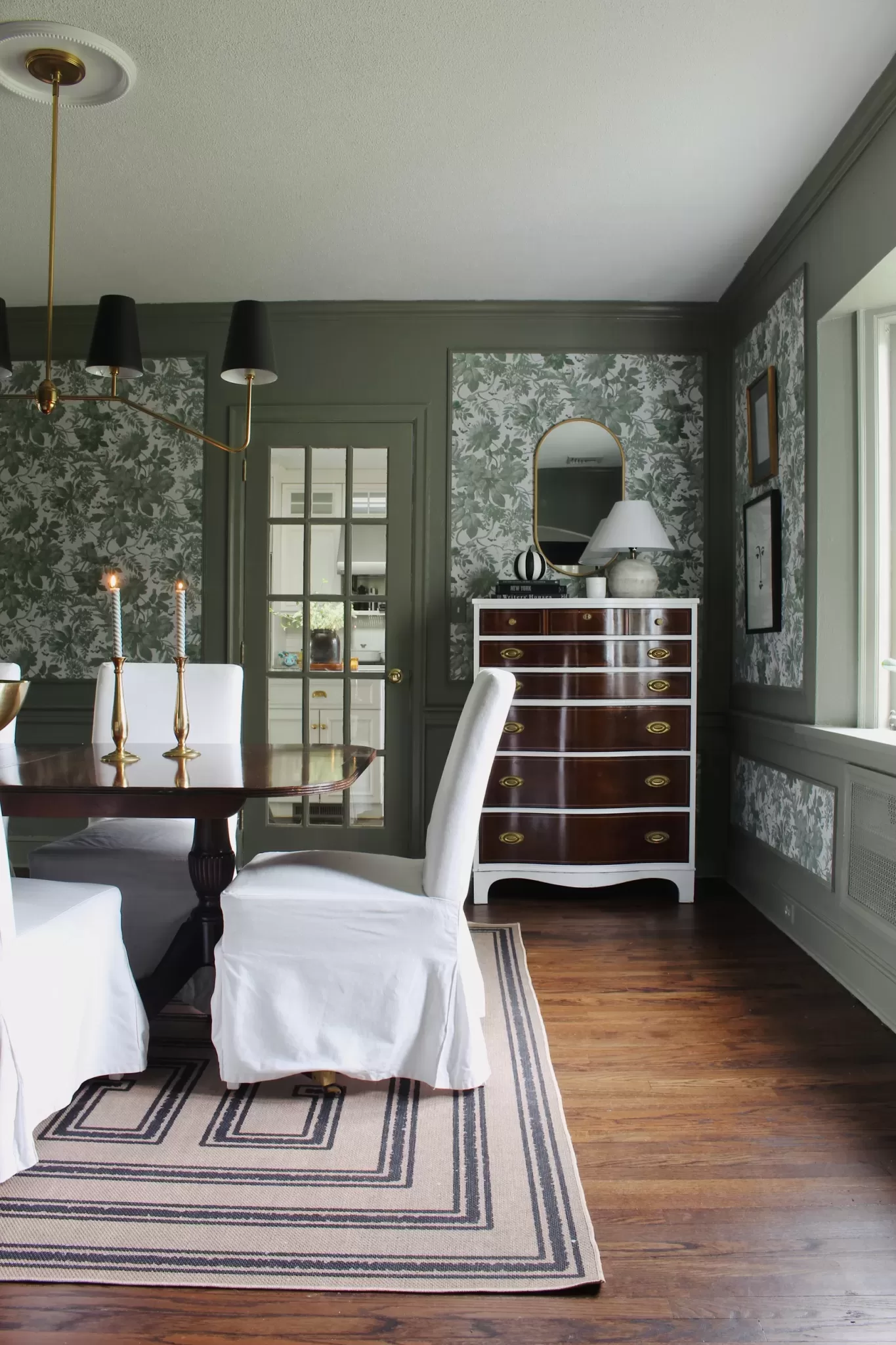
This is where the restraint comes into play again.
If you’re mixing furniture styles, different eras, patterns, price points and random flea-market finds, you need something that ties it all together, so, once again, it doesn’t start to feel like a thrift shop. Color is one of the best ways to do that.
That doesn’t mean everything has to match, or that you need to repeat the exact same shade everywhere. But having an obvious color palette makes it much easier to bring in pieces that are otherwise quite different.
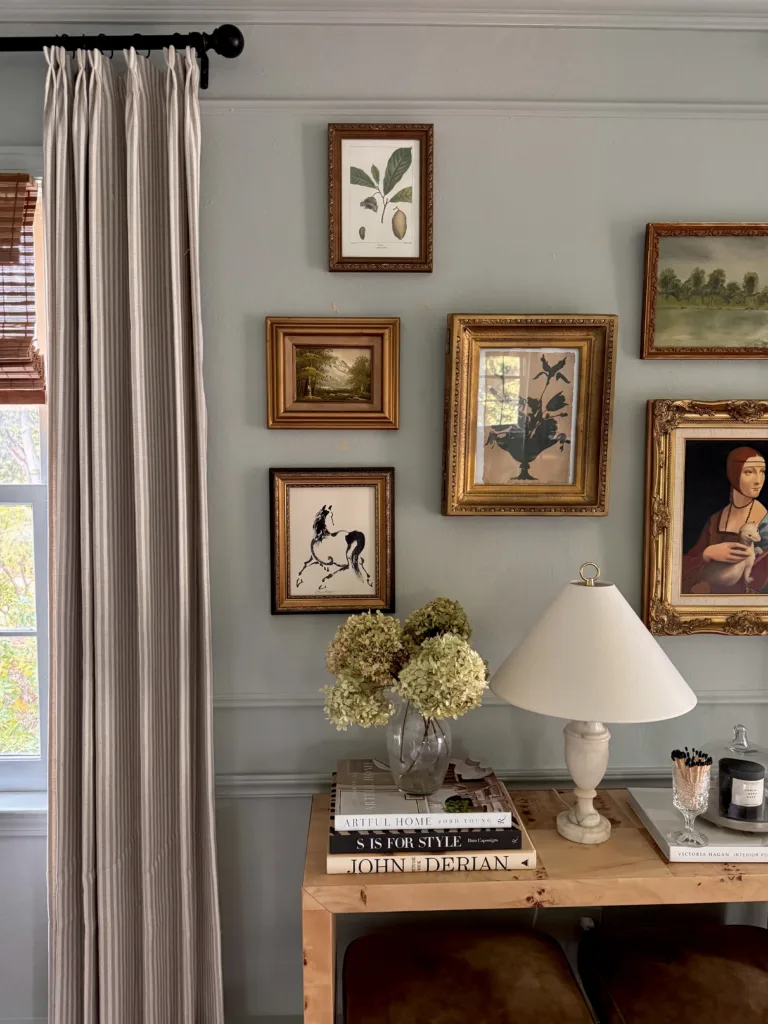
For example, if your room is built around warm wood tones, creams, muted blues and olive greens, the combination of an antique painting, a new sofa and a vintage rug can all feel connected even if they come from completely different places and decades.
I also like repeating colors in small doses around a room. If there’s a rusty red in a rug, maybe it shows up again in a book spine or piece of art. A green chair might relate to the greenery in a painting across the room. Those little repetitions are often what make a collected space feel intentional instead of scattered.
I keep this in mind across my entire house, too. Repeating a handful of colors, wood tones and finishes from space to space helps everything feel like part of the same home.
Be patient.
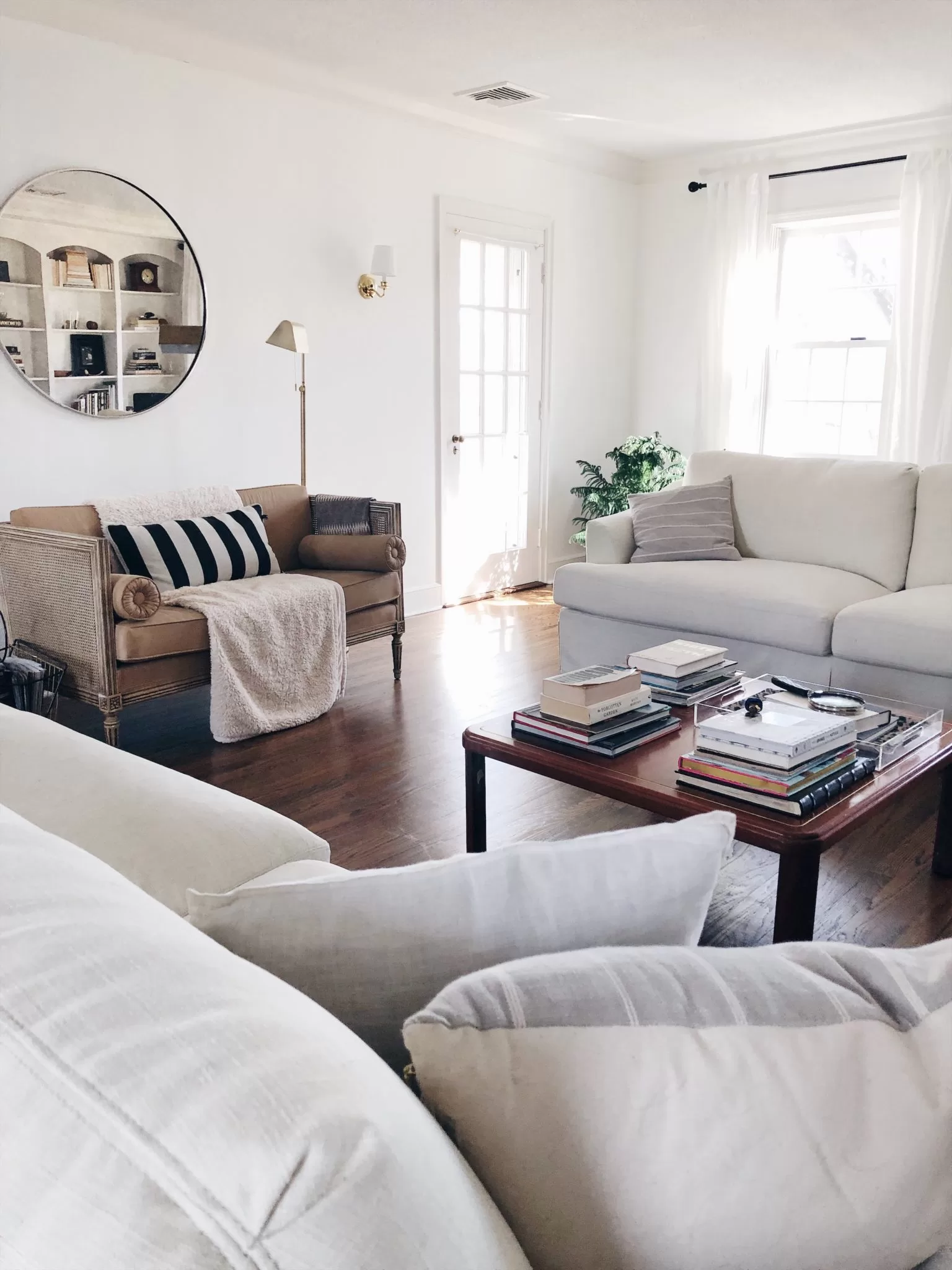
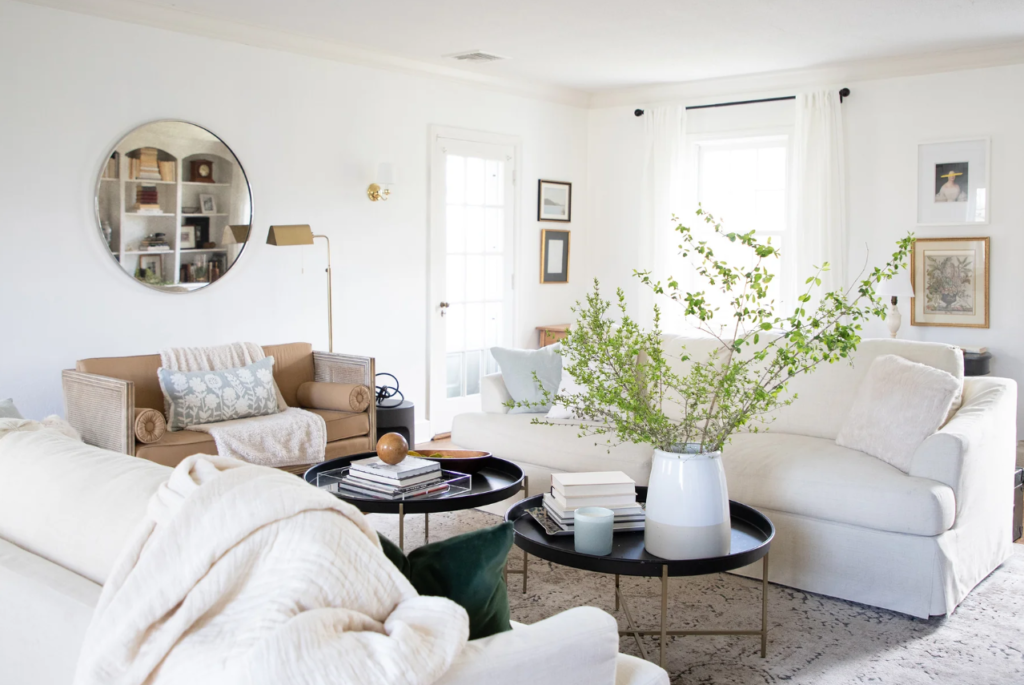
This might be the least satisfying advice if you’re staring at an empty room, but it’s probably one of the most important pieces.
A home can’t really look collected if, well, you’re not collecting. And collecting takes time. I’ve been in my house for 8 years and I’m still collecting.
Of course, if you’re starting from scratch, you can get your foundational pieces (often the things you buy new anyway), like a sofa, coffee table and an armchair all at once. But the collected stuff, the accent tables, the artwork, the books and objects, should be gathered as you find things you love.
I usually keep a running list of things I want for a certain room so when I go to flea markets or look on Facebook marketplace, I remember what I’m looking for.
One of the best parts of decorating this way is that your home evolves. You find a better side table, move the old one upstairs, discover a painting at a flea market and suddenly rearrange an entire wall around it.
Remember the goal is personal, not perfect.
When people come into my home, the compliment I most often get is not that it’s pretty or stylish, but that it’s cozy. People tell me they like coming over because it feels warm and comfortable. I think that’s the goal, and the real payoff, of an intentionally collected home. It’s aesthetic enough that it feels pleasant to be in, but it’s also interesting and personal and maybe a little odd, which gives people permission to relax.
I think we’ve become so used to seeing highly styled homes online that it’s easy to edit out anything that doesn’t fit an exact aesthetic. But a house where everything was chosen purely because it looks good can end up feeling strangely impersonal.
So, just like mixing old and new, and different styles, a truly well-collected home comes down to a mix of beauty and personality, polish and imperfection, things you chose because they look good and things you kept because they mean something to you.
What to look for if you’re new to collecting
If you’re new to the collected home vibe, here are some of the things to look for at vintage stores, thrift shops, antique malls and on Facebook marketplace.
- Art & frames.
- Mirrors
- Side tables
- Stools
- Dressers
- Console Tables
- Dining tables
- Vases
- Dinnerware
- Objects, like bookends, figurines, candlesticks, baskets
- Books
- Rugs
What to buy new
In general, I buy these things new
- Upholstered pieces like sofas, armchairs
- Beds
- Bedding
- Drapery & textiles
- Certain rugs
- Decor, only when there’s a new trend I love and want to try
Happy hunting!