The Best Sage Green Paint Colors 2026 – I’ve Tested So You Don’t Have To

Would you like to save this?
Green is the color I come back to over and over again. I’ve tested more shades of green paint in my own house than any other color family—sage, olive, deep forest, gray-greens—you name it. At this point, I have three green rooms in my house, and another 15 or so green paint samples sitting in my garage.
Instead of relying on tiny paint chips or online photos, I’ve brushed these colors on real walls in real light—north-facing bedrooms, bright south-facing living spaces, even our laundry room. That kind of testing tells you a lot more than a swatch ever will. Below are a few of the sage greens I’ve personally tried, along with notes on how they behaved in my home.
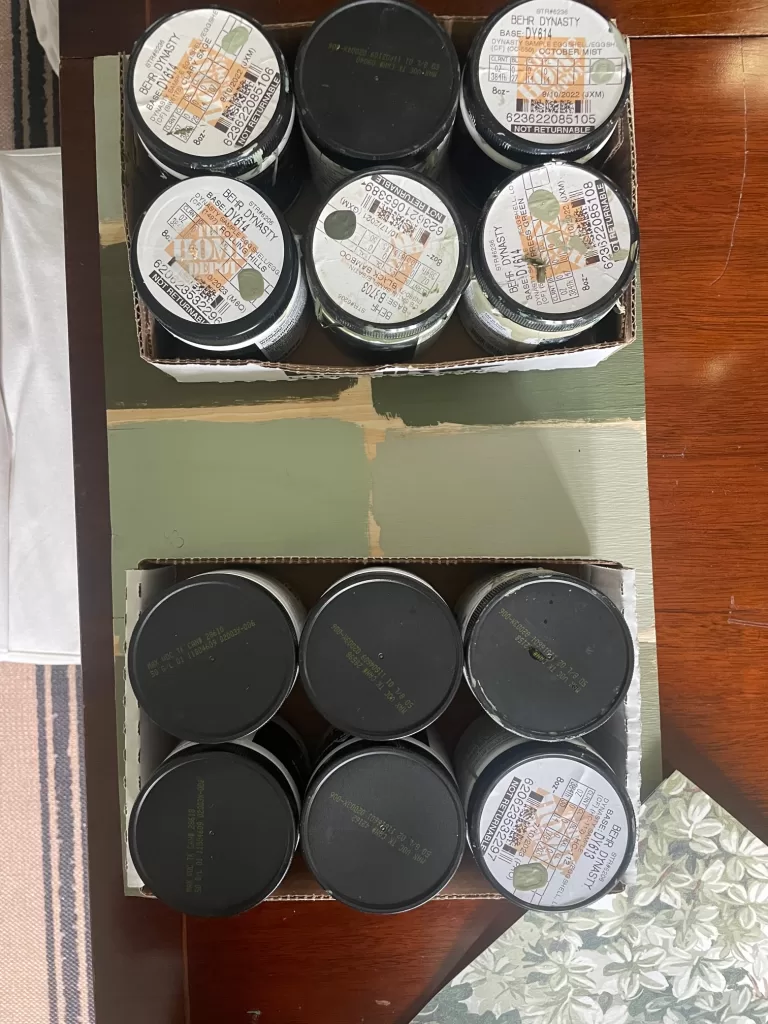
Because I’ve done all sorts of real-life testing, I thought I’d share my favorite sage green paints to give you a starting point for your space.
The Sage Green Paint Colors I Tested
Before we get into specifics, a few practical points:
- Screens lie. Paint almost always looks different in your house than it does online. Test first. I prefer peel-and-stick samples so I can move them around throughout the day.
- If you struggle with undertones, read my guide on how to choose a paint color—I break it down in a more objective way so you’re not just guessing.
- I’ve included both lighter and darker tones in this list, so I added the LRV (Light Reflectance Value) for each shade. LRV runs from 0 to 100:
- 0 = true black
- 100 = pure white
Lower numbers mean a darker, moodier color. Higher numbers mean a lighter, more reflective one.
Shop Peel and Stick Samples of the Best Sage Greens:

The best sage green paint colors
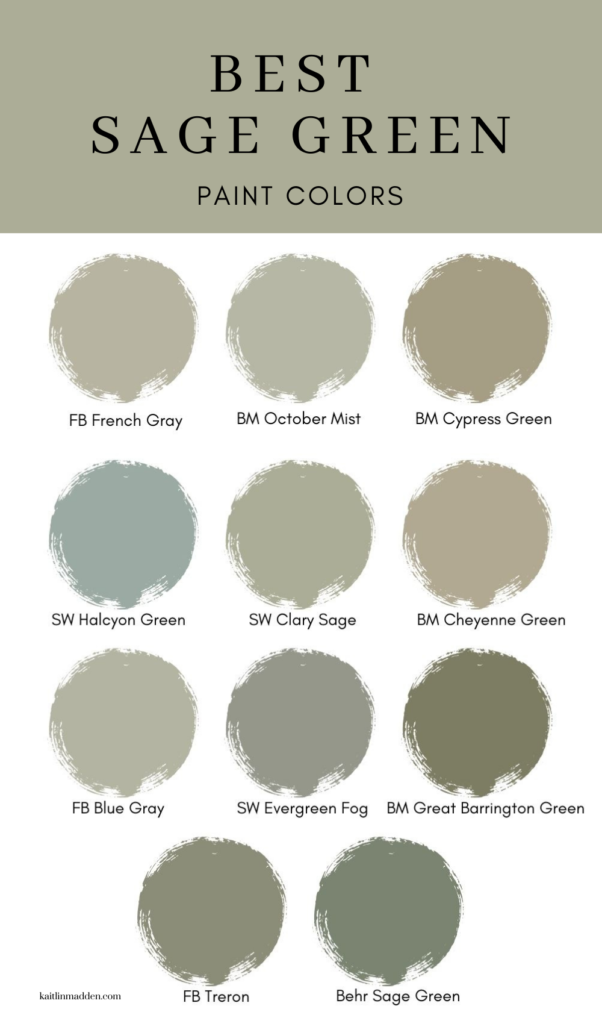
1. Farrow & Ball French Gray
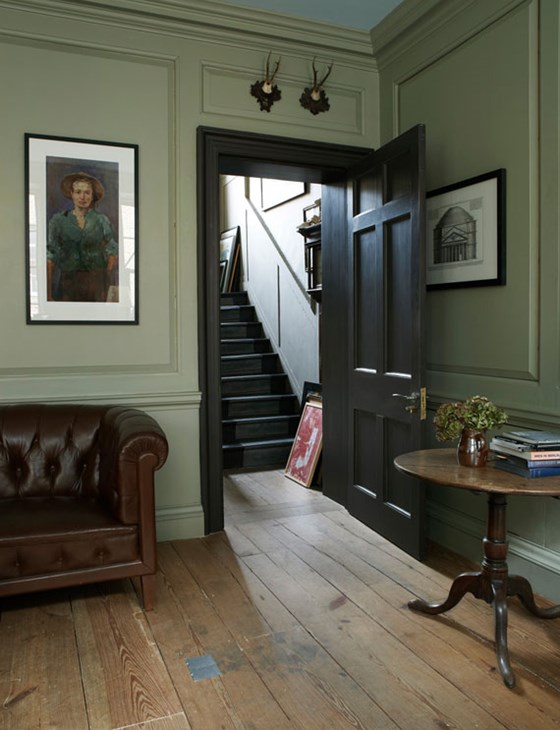
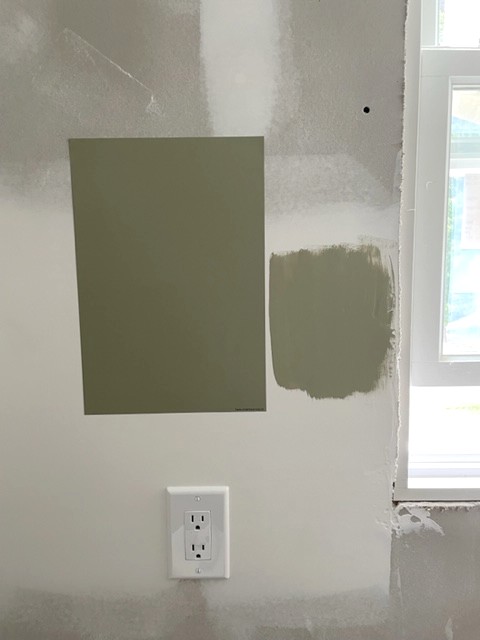
LRV: 24
Despite its name, French Gray is not all that gray. Instead, it reads as a pale green with gray undertones. It’s a gorgeous, muted shade of shade that feels very elegant.
I tested the color in our family room during our renovation, and, even though I ended up going with something a bit more taupe, I’m still looking for a chance to use French Gray in my house.
2. Benjamin Moore October Mist
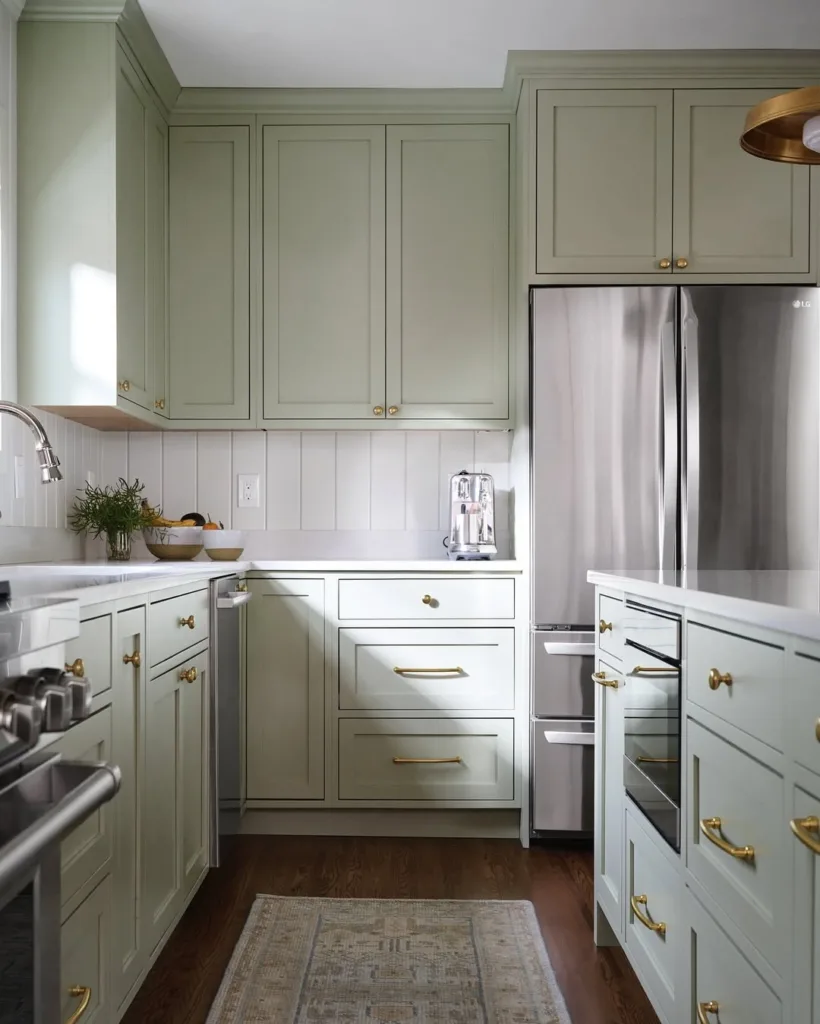
LRV: 40.54
October Mist was Benjamin Moore’s 2022 color of the year. It’s a gorgeous sage tone that’s got warm gray undertones, which makes it almost a neutral and super easy to use. It was my runner-up choice!
In my opinion, this color is a modern take on a true sage, thanks to the neutral undertones. I find that sage greens with too much blue in them remind me of suburban homes in the ’90s and early 2000s, when everyone’s mom paired the color with oak cabinets and cranberry-colored accents. Yikes.
3. Benjamin Moore Cypress Green
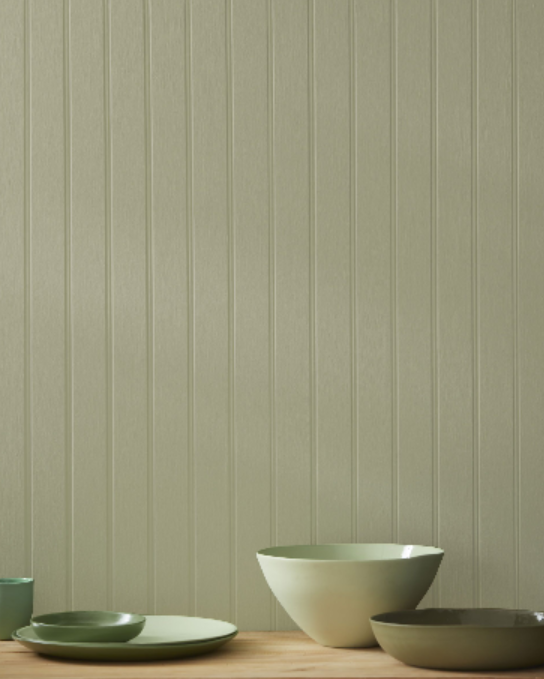
Cypress Green was the deepest of all of the colors I tried, so it’s a good choice if you’re looking for a sage green that borders on a pale olive tone. I loved this color. With an LRV of 34.4, it’s a mid-tone paint colors that would be perfect for a front door, or as a cabinet (or island) color in the kitchen.
Shop my favorite sage green paints here:
4. Sherwin Williams Halcyon Green
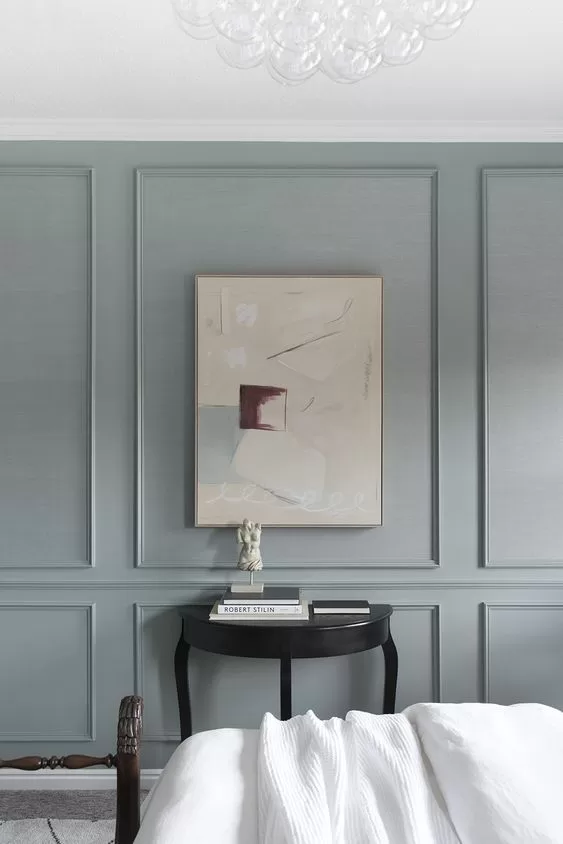
Sherwin Williams Halycon Green is a rich green shade with blue and gray undertones. It’s incredibly soothing and sophisticated, which, to me, makes it the perfect choice for a bedroom. Depending on the light, it can read like a blue, a gray, or a green – in my home it was more of a blue – so be sure to test this one out first!
5. Sherwin Williams Clary Sage
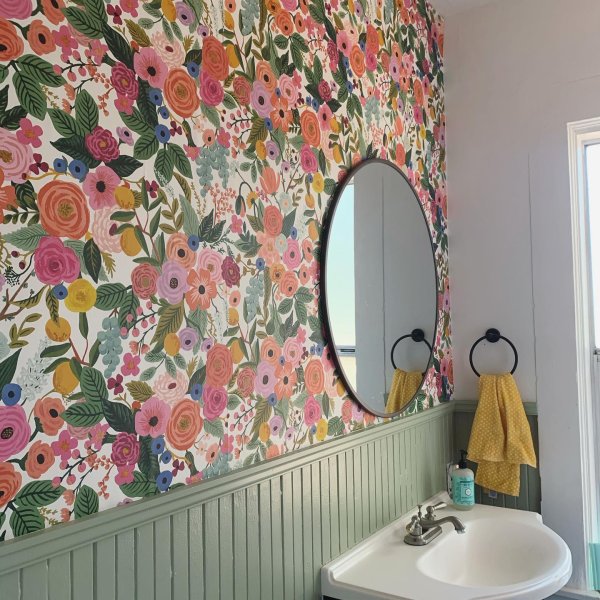
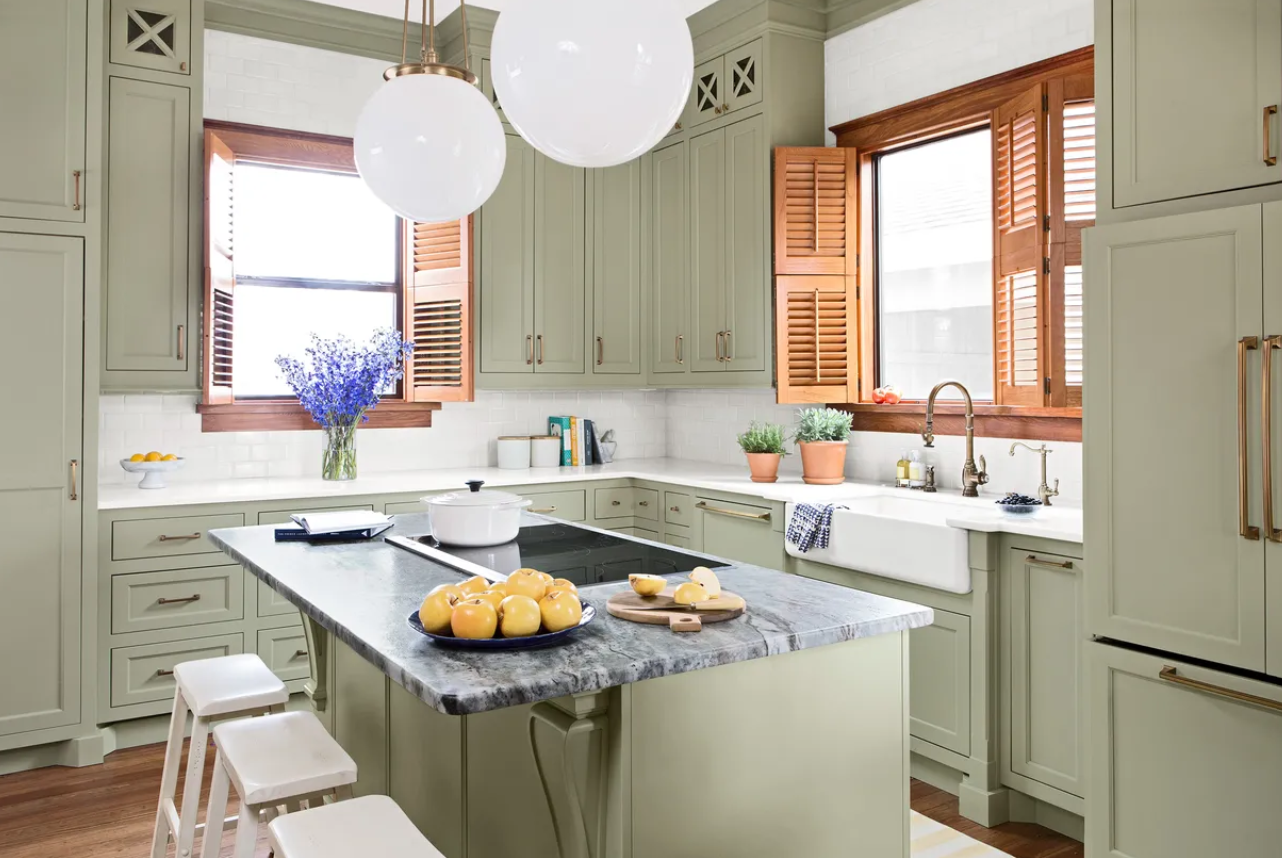
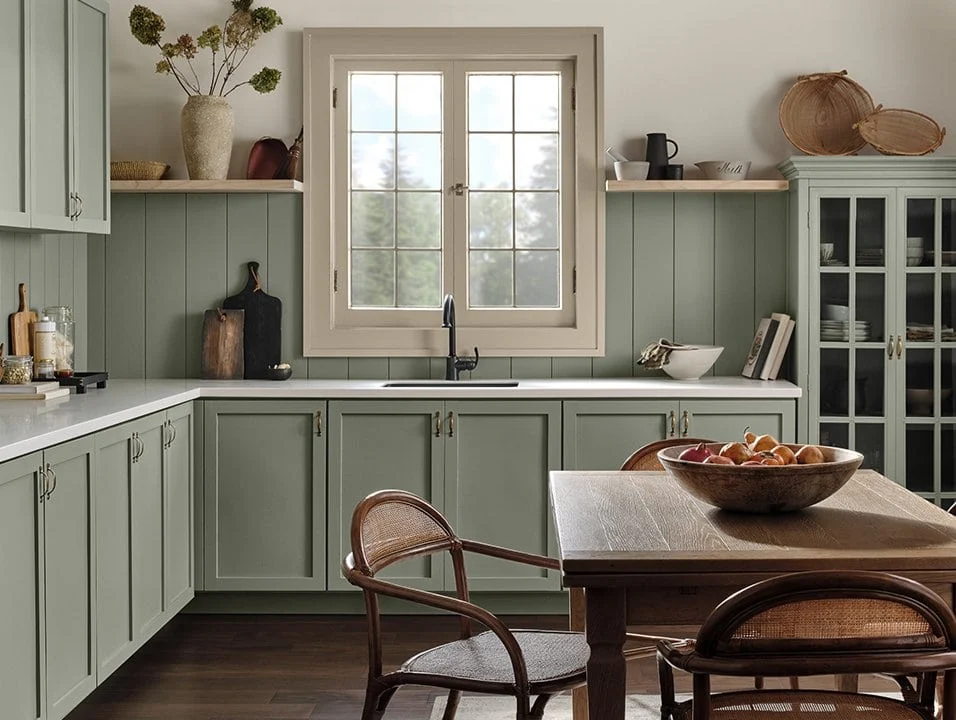
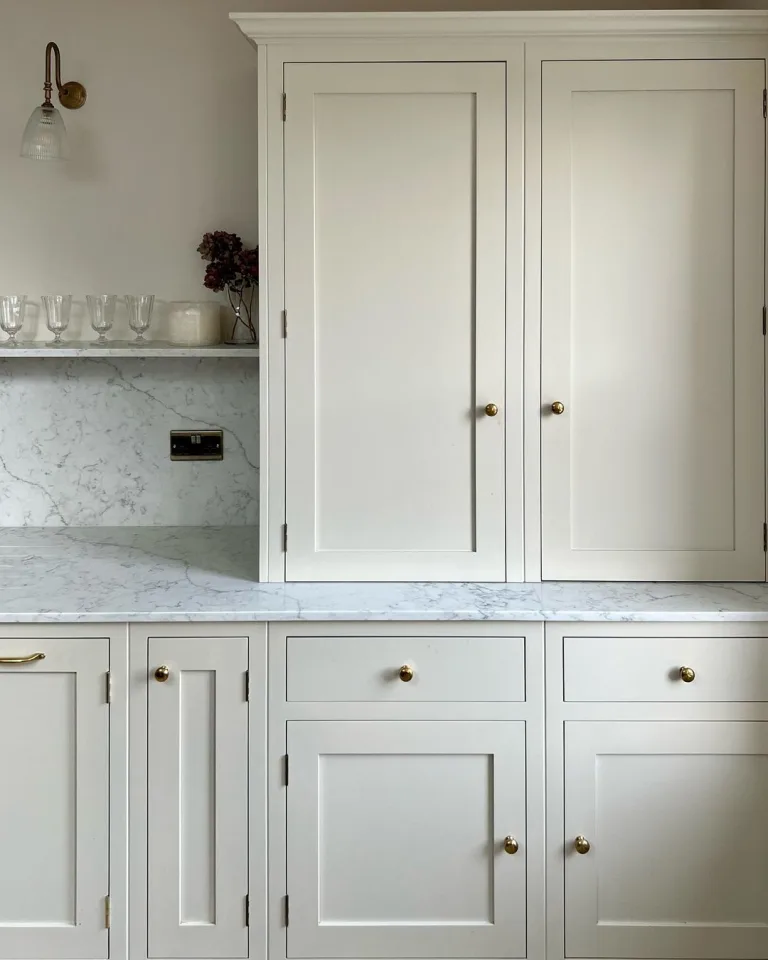
Sherwin Williams Clary Sage is a popular medium-green with blue-gray undertones. Depending on the lighting, it can come off as a more gray green, or a taupe-ish green. I love how it looks on the cabinets in the kitchen, above!
6. Benjamin Moore Cheyenne Green
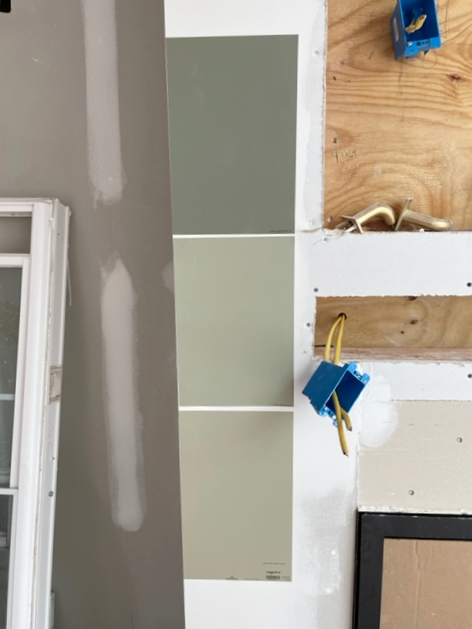
Cheyenne Green (also known as Nantucket Gray) is a gray-toned sage green that reads more neutral than some of the other tones on this list. You can see in the photo above, that I’ve paired the swatch against Benjamin Moore Rolling Hills (top) and F&B French Gray (middle).
I’ve seen Cheyenne Green touted as a dupe of Farrow & Ball French Gray, but as you can see above, the two are noticeable different, with Cheyenne Green being the more neutral of the two.
7. Farrow & Ball Blue Gray
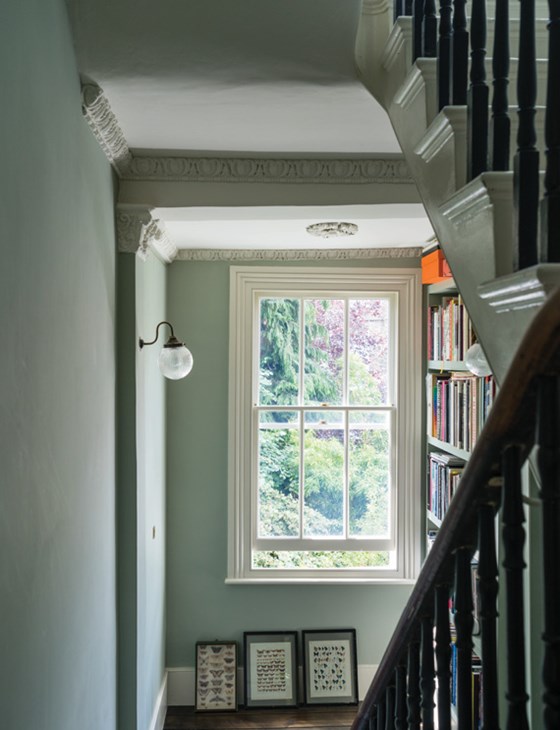

Blue Gray isn’t really blue or gray at all. They should call it Blue-Gray Green, because it’s a blue-ish toned shade of sage green. It’s less gray then French Gray, and more blue, so the color feels a little clearer and brighter, too. It’s a beautiful color, but I passed on it because I was choosing something for a room that gets a lot of natural light, so the color felt a little too, well, colorful, and I wanted something with more neutral tones.
8. Sherwin Williams Evergreen Fog
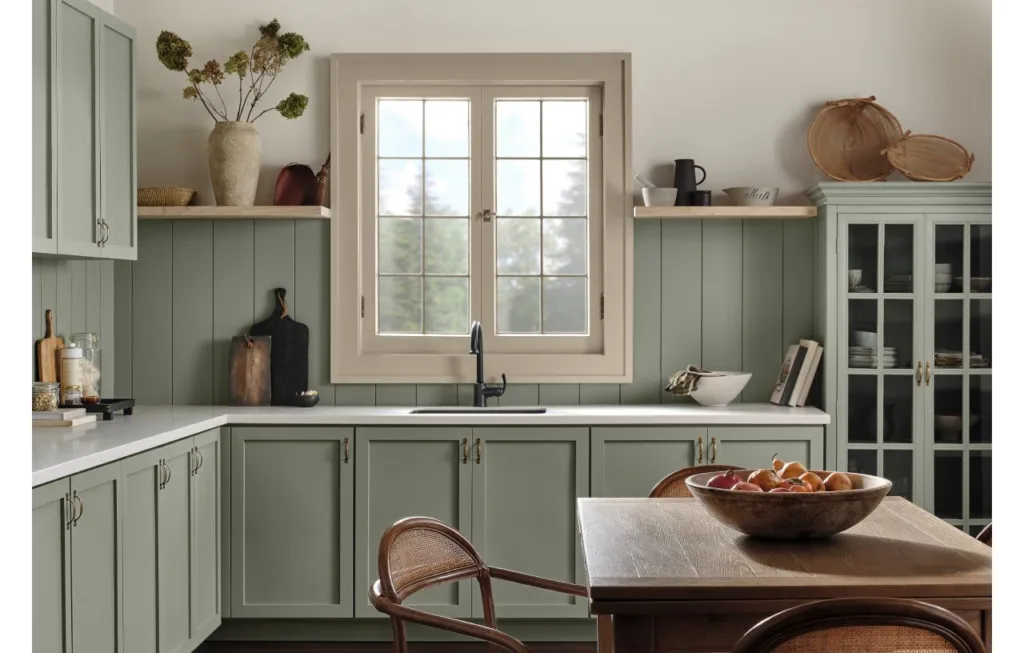
Evergreen Fog was Sherwin Williams Color of the Year in 2022, and it’s not hard to see why this one stands out above the rest. It’s a beautiful mid-tone gray-green color with the sophistication and versatility of a neutral. It’s more of a cool-toned blue-green, which, to me, makes it a lovely pick for a bedroom or bathroom.
9. Benjamin Moore Great Barrington Green
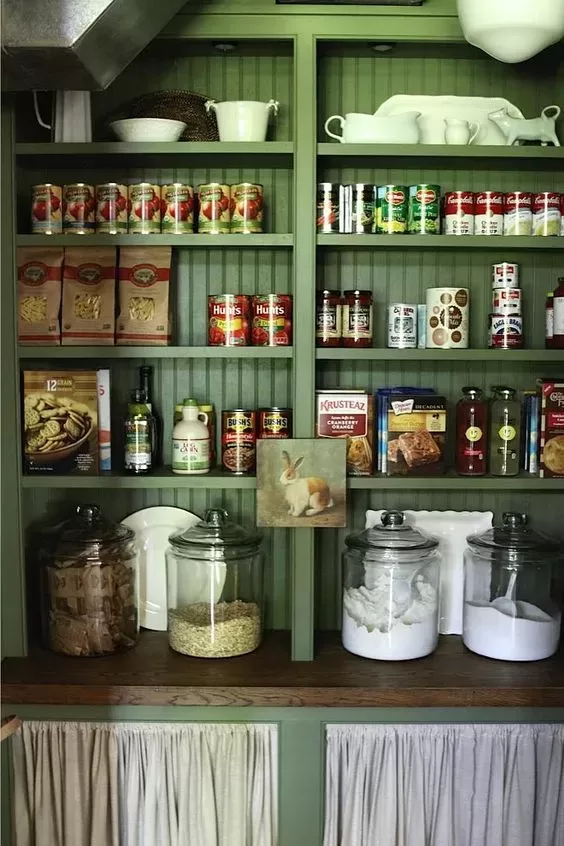
If you’re looking for a deeper shade of sage green, try Benjamin Moore’s Great Barrington Green. According to BM, it’s a “deep shade of mossy green,” but it has enough of a chalky, neutral tone that it reads to me like a deep shade of sage. I absolutely love Great Barrington Green as an exterior color, too.
10. Farrow & Ball Treron
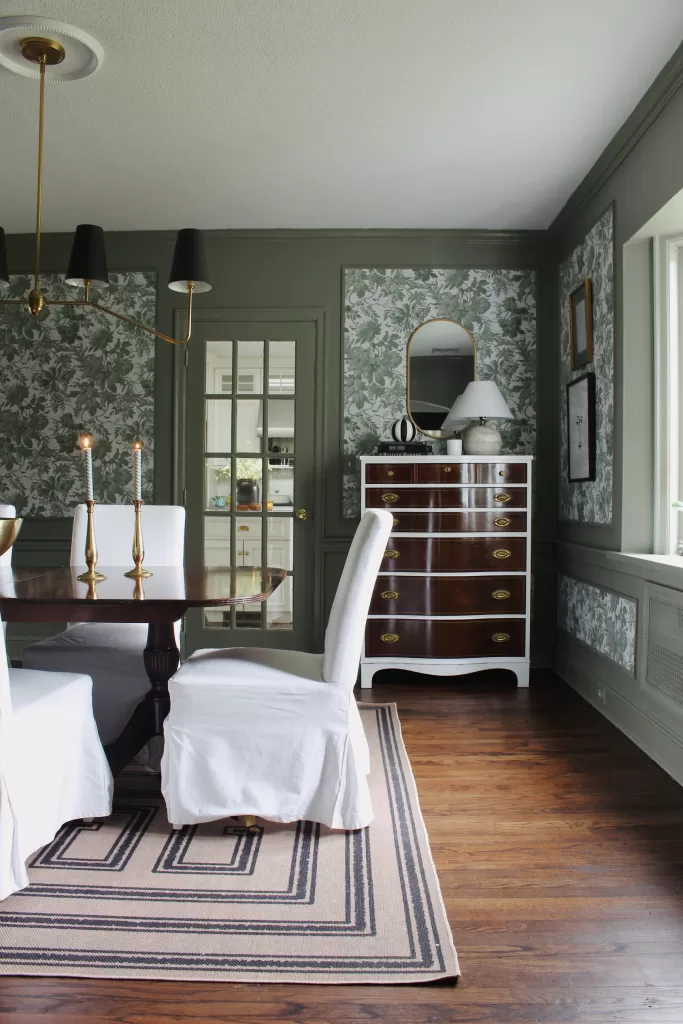
Treron is the color I ended up using in my dining room. It’s another shade of deep sage green, which makes it feel moody and sophisticated. I used the color in a room that gets cool-toned, North-facing light, which makes it feel even darker. However, in a brighter, south-facing space, the shade would appear brighter and more green.
11. Benjamin Moore Oil Cloth

LRV: 33.16
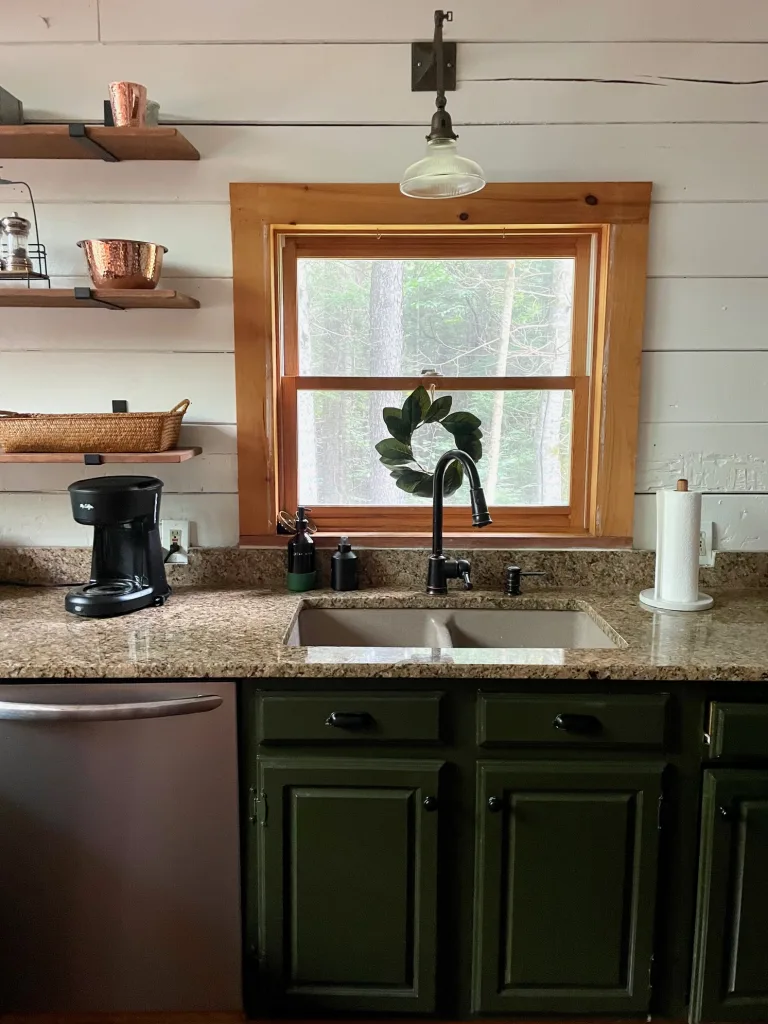
Oil Cloth is one of those colors that sits right on the line between sage and muted olive. It has more depth than a typical light sage, but it’s not dark enough to feel dramatic. In my testing, it read earthy and grounded, with subtle gray undertones that keep it from going too yellow.
This is a good option if you want a green that feels intentional—not airy or pastel. It pairs especially well with warm woods, aged brass, and off-whites like White Dove. On cabinetry, it has enough pigment to hold its own. On walls, it creates a cozy, enveloping backdrop without feeling heavy.
In north-facing rooms, expect it to lean a touch moodier. In bright natural light, the green comes forward and the gray recedes slightly.
One last thing…
My final piece of advice: if you’re narrowing down sage greens, start by deciding how much depth you want. Do you want something closer to a neutral backdrop (higher LRV, softer undertones), or are you comfortable with a richer, moodier green (lower LRV, more pigment)?
That single decision will eliminate half your options immediately, and save you from sample fatigue.

5 Comments