The Best Duvet Inserts & Comforters of 2026, According to A Home Editor
Would you like to save this?
I write a lot about thrifting, shopping secondhand and hunting down a good bargain. But I also believe that there are certain areas of your home where it pays to invest a little more, and bedding is one of those areas. It’s a buy-once, buy-well kind of thing, both when it comes to the foundational pieces like your mattress and your pillows, but also the slightly smaller purchases like finding the best duvet insert or down comforter. The right one can make crawling into bed at night one of the best parts of the day.
If you’ve been to the site before, then you know I’ve spent the last 15 years as a home editor and writer, and in that time I’ve gotten to test just about everything a bed can hold, including a whole bunch of duvet inserts. What I’ve learned is that duvets aren’t really one size fits all. It’s more a matter of finding one that fits how you like to sleep and what you’re willing to spend. The lofty down insert I’d call my overall favorite for my bed here in the Northeast isn’t the one I’d point to if you live in the south or you want something hypoallergenic.
So rather than crown one winner and call it a day, I’ve broken down my picks into a few different categories based on things like material, price and temperature regulation. I’ve included my best overall duvet insert, the one I’ve been obsessed with for years (it’s from a brand you probably wouldn’t expect!). Then there’s a best down alternative for anyone dealing with allergies or who’d simply rather skip the down, along with a budget-friendly pick, and a couple in materials that also may be unexpected if you don’t spend a lot of time shopping for bedding.
But before I get to my top picks, I’ve included a few important buying tips I’ve learned through the years so you can know what to look for and what to avoid. I think they are important for context, but if you’d rather skip to the shopping, click here.
This post contains affiliate links, which means I may earn a small commission if you buy something through them, at no extra cost to you. Some of the products featured were sent to me by brands or PR reps, but I only recommend items I’ve actually used and genuinely love. All opinions are my own.
What to Look For (and What to Avoid)
There are a few things I find essential in a good duvet insert.
Look for corner loops. Don’t skip this detail. A good duvet insert has loops sewn into each corner so you can tie it to the interior ties inside your duvet cover and hold everything in place. I’ve tested inserts without them, and no matter how nice the insert is, it ends up bunched and rumpled at the bottom of the cover within a night or two. It seems minor when you’re shopping, but it’s not minor when you’re living with it. If an insert doesn’t have corner loops, keep looking.
Choose a natural-fiber shell. I’m generally not a fan of polyester bedding. Down-alternative fills are usually synthetic by nature, that’s the tradeoff you accept, but the outer shell of your duvet is the place you should draw the line. I always look for a cotton or natural-fiber shell. Even with a duvet cover over the top, I find polyester shells just aren’t as breathable (no matter what the “cooling” label says) and they tend to slip around more inside the cover, too. Cotton breathes better and stays put.
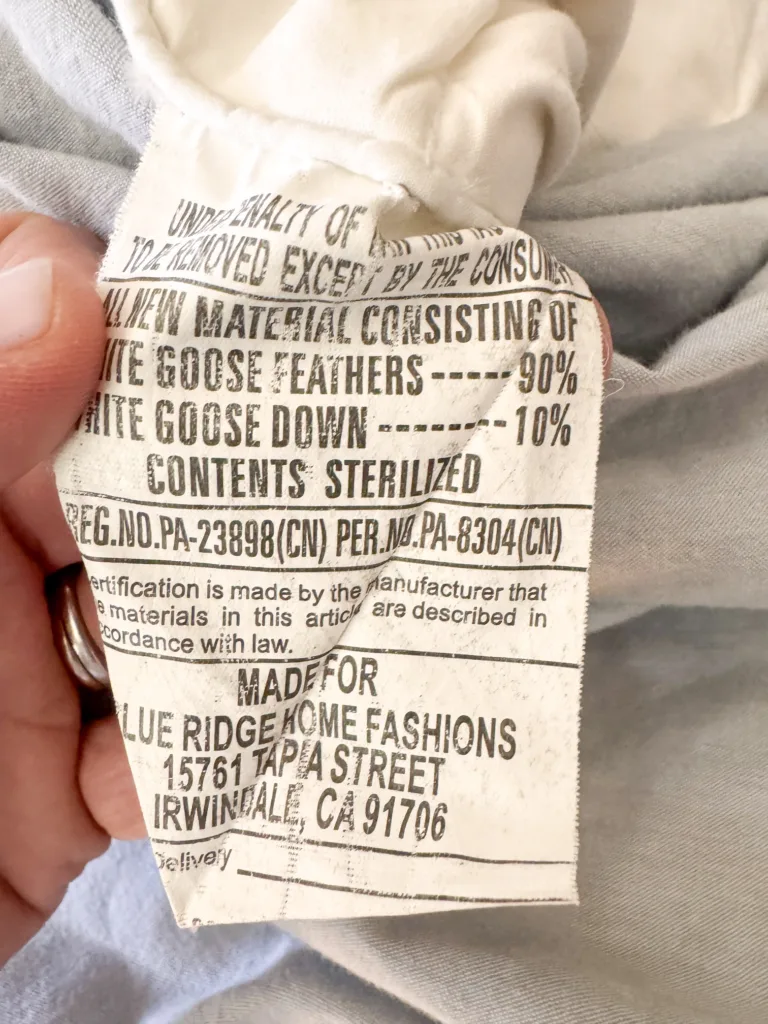
Know what you’re actually buying: down vs. feathers. This is the one that trips people up. A lot of comforters marketed as “down” today are actually a blend of down and goose feathers, and there’s a difference. True down is the soft, fluffy undercoating; it’s quieter, cozier and has more loft. Goose feathers are cheaper, and they’re the reason some duvets feel almost “crunchy” or crackly when you move around under the covers. That sound is feathers, not down. Because real down costs more, most of the “great deals” you’ll spot online are heavy on feathers with a little down mixed in. My advice: For your own bed, look for something with at least 75% down. You’ll feel the difference in softness and loft every night. (I’ll admit I buy the down-and-feather blend for my kids’ beds, though. There’s a limit to what I’ll spend on a five-year-old who sleeps in my bed half the time anyway.)
Consider weight. Overall, unless you are freezing at night or you live in Alaska, I find that “heavy” down comforters and duvet inserts are too heavy. I tend to sleep warm, and stick with medium or “year-round” fill. Lightweight options can feel a little thin, and are best for summer or warm climates.
The Best Duvet Inserts & Down Comforters
Here’s my quick list of the best duvet inserts, followed by a chart ranking key stats about each one, but you can jump down to read more about them:
- Best Duvet Insert Overall: Charter Club White Down Medium Weight Comforter
- Best Value Down Duvet Insert: ComfyDown Goose Down White Comforter
- Best Down Alternative Duvet Insert: Cozy Earth Down Alternative Duvet Insert
- Best Lightweight Down Alternative Duvet Insert: Saatva Lightweight Down Alternative Comforter
- Best Cooling Duvet Insert: Cozy Earth Bamboo Viscose Comforter
- Best Wool Duvet Insert: Woolroom Classic Wool Medium Comforter
| Duvet Insert | Value for the Price | Comfort | Breathability | Quietness | Wear & Tear | Construction Quality | Overall |
|---|---|---|---|---|---|---|---|
| Charter Club White Down Medium Weight Comforter Best Overall | 10 | 10 | 8 | 10 | 10 | 9 | 9.50 |
| ComfyDown Goose Down White Comforter Best Value Down | 10 | 8 | 8 | 7 | 9 | 9 | 8.50 |
| Cozy Earth Down Alternative Duvet Insert Best Down Alternative | 10 | 9 | 9 | 10 | 9 | 9 | 9.33 |
| Saatva Lightweight Down Alternative Comforter Best Lightweight Down Alt. | 8 | 8 | 9 | 10 | 8 | 9 | 8.67 |
| Cozy Earth Bamboo Viscose Comforter Best Cooling | 9 | 8 | 10 | 10 | 7 | 9 | 8.83 |
| Woolroom Classic Wool Medium Comforter Best Wool | 8 | 8 | 8 | 9 | 7 | 9 | 8.17 |
Each insert was tested firsthand on my own bed and scored 1–10 across six criteria; the overall score is the average of the six. Scores reflect my own testing and preferences.
Best Duvet Insert Overall: Charter Club White Down Medium Weight Comforter
- Best for: Down-lovers who want a soft, cloudlike, long-lasting duvet insert.
- Fill: 600 fill power white down, baffle-box construction
- Shell: Cotton, OEKO-TEX STANDARD 100 certified
- Weight: Medium (also comes in Lightweight and Heavyweight)
- Corner loops: Yes
- Price: ~$570 king full price, but regularly 50%+ off (recently as low as ~$228)
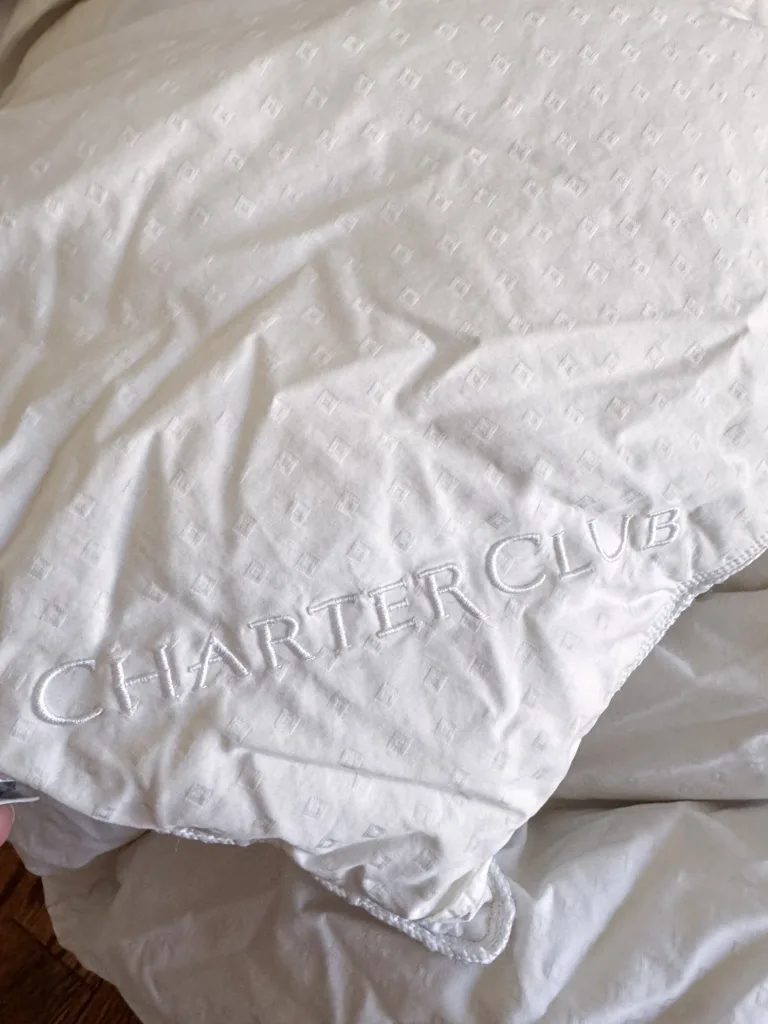
When it comes to down comforters, it’s hard to beat Charter Club. Yes, the old-fashioned Macy’s private-label brand. When I was a kid, Macy’s was my family’s go-to for bedding, so years later, when I was shopping for a new down comforter for my own bed, I happened upon this duvet and decided to take a leap of faith on it. I’m so glad I did, because it’s been my go-to ever since. I’ve since tested comforters from brands like Pottery Barn and Boll & Branch, and this Charter Club insert is still my favorite of them all. It’s lofty, warm, snuggly, and quiet, with no crunchy feathers or clumps of down bunched up in one corner of the blanket. It genuinely makes me happy to climb into bed every night.
I first bought mine in 2017, which means I’ve had it for almost 10 years, and it’s still in great condition. I also think that, especially compared to other brands I’ve tested, it’s an incredible deal. The full price for a king size is $570, which is admittedly expensive …. but here’s the thing: You’re not going to pay full price. Macy’s puts this comforter on sale at least once every few months, so you can usually get it for half off (or even less, at the time of writing this, it’s on sale for $228). At anything under $300 for a king size, this becomes one of the best duvet deals around.
Best Value Down Comforter: ComfyDown Goose Down White Comforter
- Best for: Kids rooms, since it’s machine washable and doesn’t cost a fortune
- Fill: 650+ fill power European goose down
- Shell: 100% Egyptian cotton, made in USA
- Weight: Lightweight, all-season
- Corner loops: Yes
- Price: $150-$199, depending on size
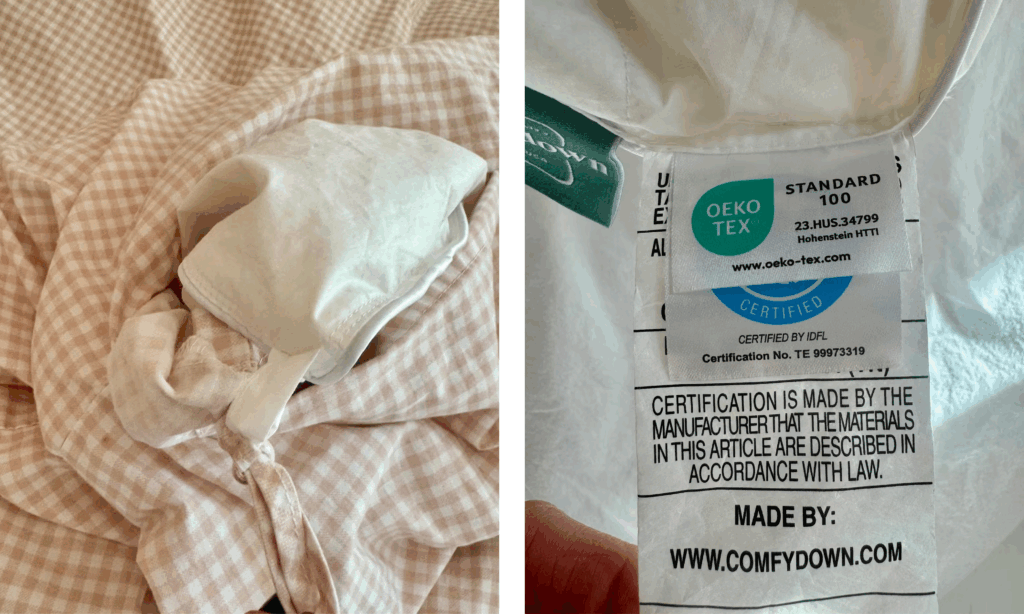
This ComfyDown comforter was sent to me to test, and it turned out to be a perfect fit for my daughter’s room. I was putting together her new big-girl bed and wanted something extra cozy for her, and this made the cut in terms of both comfort and quality. It has cotton shell that’s marketed as ‘down-proof’ (meaning no feathers poking out), its OEKO-TEX certified, it’s made in USA and it’s machine washable. It’s also 100% down, which is particularly notable, since so many “down” comforters are actually a down-feather blend, especially at lower price points.
It’s become one of my favorite budget finds. This is a lightweight comforter, so it’s not quite as lofty or soft as my Charter Club duvet, and it is a touch noisier, but it’s held up beautifully through washing, and my daughter loves burrowing into it. For the price, it’s hard to find a down comforter that beats it, whether you’re shopping for a kid’s room like I was or just want a quality down insert without spending a ton.
Best Down-Alternative Comforter: Cozy Earth Down Alternative Comforter
- Best for: Those avoiding down but want a down-like feel
- Fill: Down-alternative made from recycled polyester
- Shell: 60% cotton, 40% polyester
- Weight: All-Year (also comes in Lightweight and Heavyweight)
- Corner loops: Yes
- Price: $309-$449 depending on size, but often on sale for 20-30% off
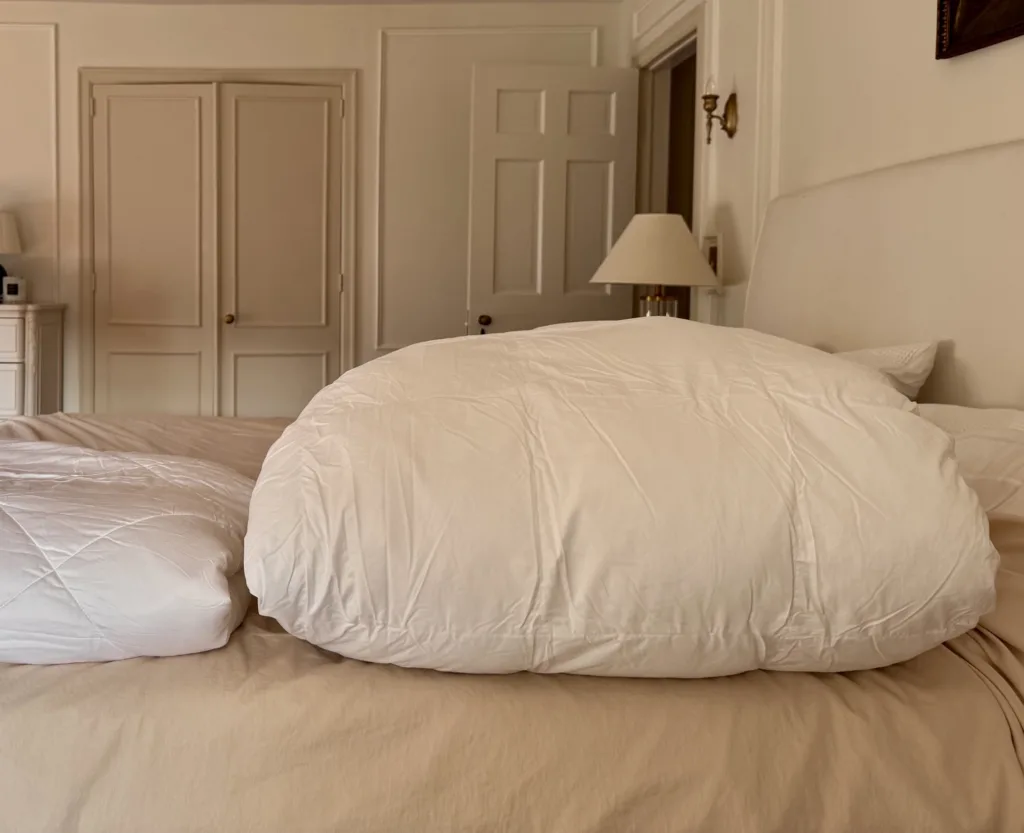
If I’m being honest, I generally prefer down comforters for myself because I just find them cozier. But down isn’t right for everyone. If you can’t sleep with it because of allergies, you’re vegan or you’d simply rather skip the feathers altogether, this Cozy Earth Comforter is truly the next best thing. And honestly, it’s so good, I’m almost tempted to use it instead of my down insert.
This is the fluffiest, most cloud-like down alternative insert I’ve ever tried. It’s soft and warm, and unlike a lot of down duvet inserts, it’s completely silent, which might sway you towards this comforter if you’re sick of rustling bedding.
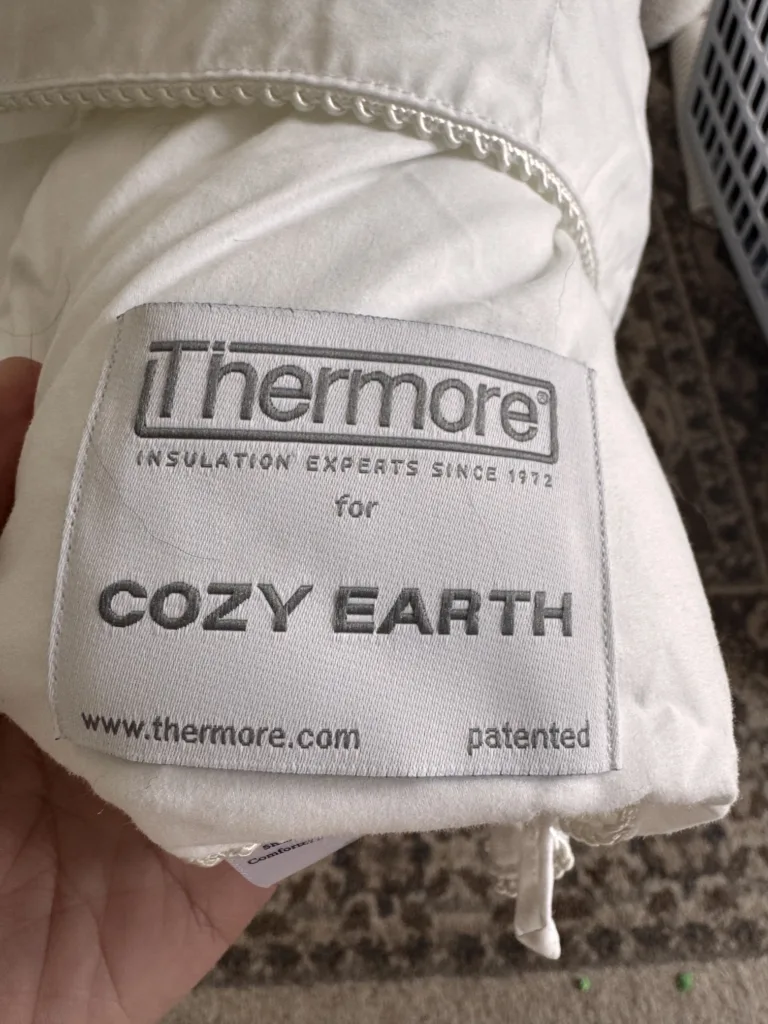
The reason the Cozy Earth down alternative comforter is so good is because it’s made in collaboration with Thermore, an Italian company that specializes in “the research, development, and production of high-quality thermal insulation.” The company mostly focuses on outerwear, but partnered with Cozy Earth to create this blanket.
Best Lightweight Down-Alternative Comforter: Saatva All-Year Down Alternative Comforter
- Best for: Hot sleepers avoiding down, warm climates, those wanting a blanket with a 100% cotton shell
- Fill: Down-alternative made from recycled polyester and lyocell
- Shell: 100% cotton sateen, baffle-box construction
- Weight: Lightweight (also comes in All-Year and Heavyweight)
- Corner loops: Yes
- Price: $235-$365 depending on size, but wait for a sale for up to 25% off
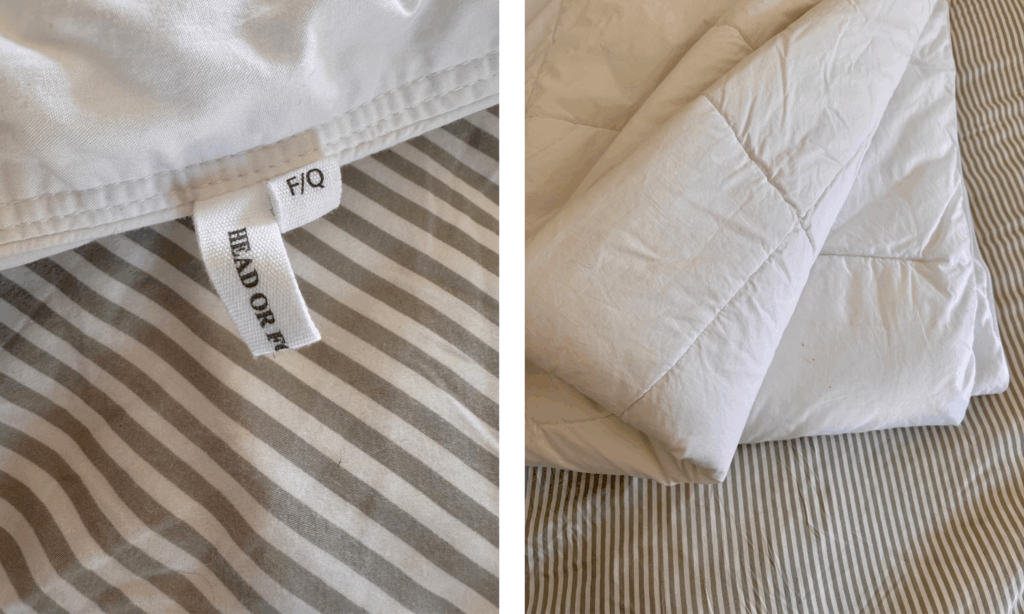
The Cozy Earth comforter is high loft, puffy and snuggly, but it’s also pretty warm. If you want something lighter weight, my pick is Saatva’s lightweight down-alternative comforter.
It’s cozy without being heavy, and it’s designed to be more breathable than the average down-alternative duvet insert because it’s made with a blend of polyester and lyocell fibers. The lyocell is added specifically to be moisture-wicking, so you don’t end up with that clammy feeling that can happen with some synthetic comforters.
It’s also not quite as lofty in general as the Cozy Earth option, and the fill has a slightly more “dense” feeling.
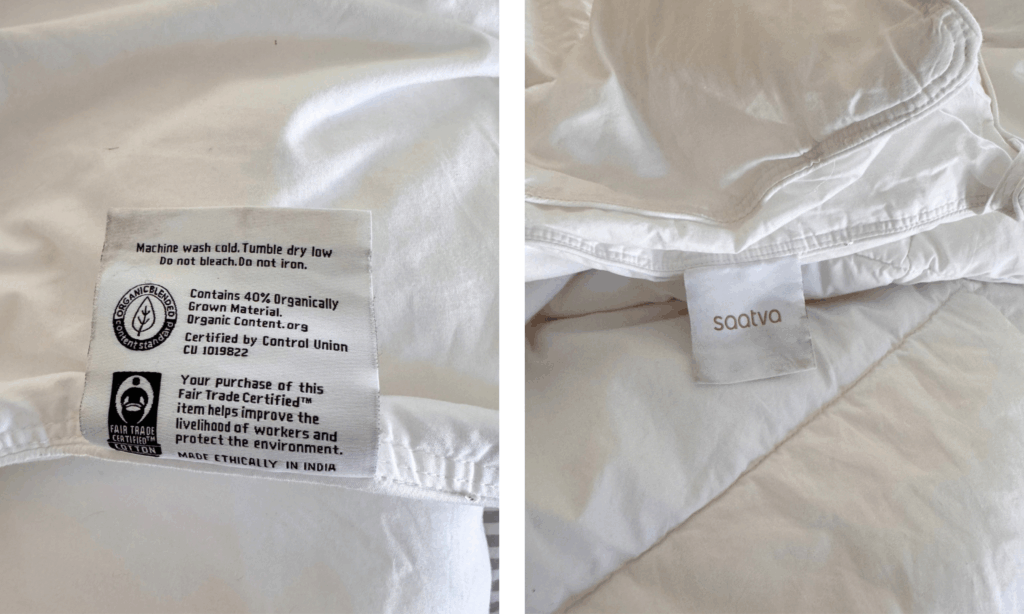
Finally, the quality on this one is beautiful. The shell is a soft, organic 400-thread-count cotton sateen, and I also found it to be slightly oversized, which gives it that full, draped look over the sides of the bed.
Best Cooling/Lightweight Duvet Insert: Cozy Earth Bamboo Viscose Comforter
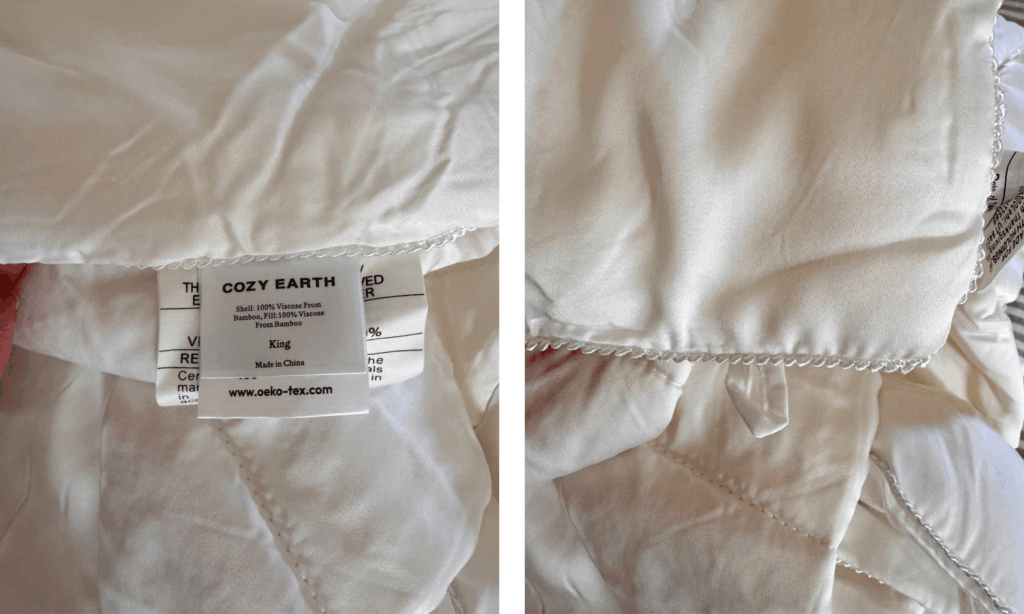
- Best for: Hot sleepers, summer, those avoiding down
- Fill: 100% bamboo viscose fiber
- Shell: 100% viscose from bamboo, baffle-stitched
- Weight: Lightweight (also comes in mid-weight)
- Loops: Yes, interior snap closures on corners and sides
- Care: spot clean or dry clean; duvet cover required for warranty
- Price: $328-$468, but often on sale for 20-30% off
The Cozy Earth bamboo duvet insert is my go-to for summer, when even the lightest-weight down comforters feel too warm for me. The bamboo viscose is extremely breathable, so I find that it really helps with keeping cool, while still feeling cozy.
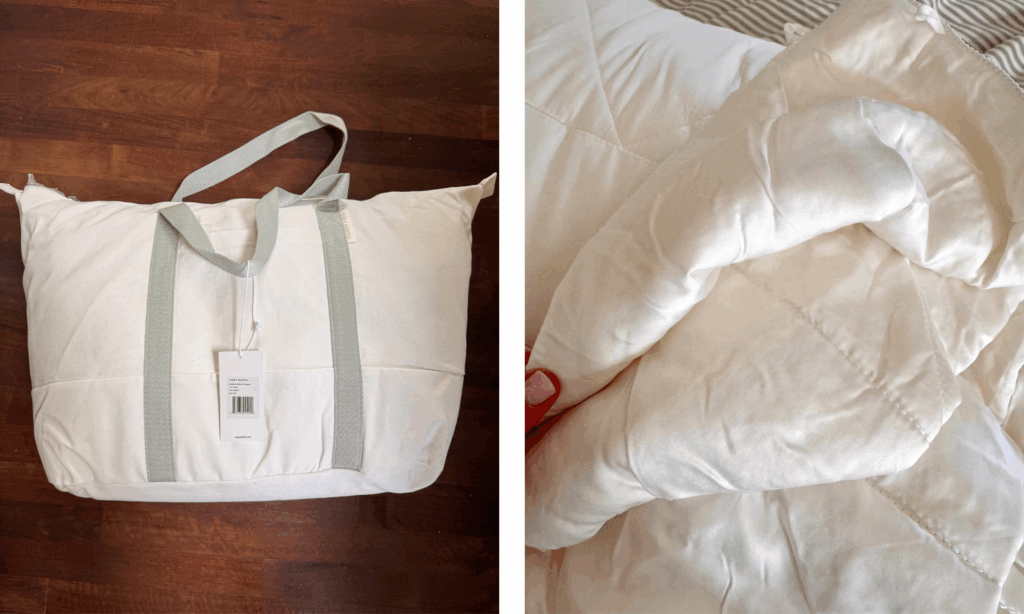
If you’re used to down or down alternative, this is different style of comforter. It’s not puffy or lofty, and it’s not overly warm. Instead, it has a silky, slightly drape-y feeling. It’s on the thinner side (perhaps about an inch thick?) but that’s by design, since it’s supposed to be a lightweight insert.
I also appreciate the quality and thoughtful details on this one. It came in a really nice bag, which I use to store it in in the winter when I switch back to my down comforter. I also like that, when I pair this with a Cozy Earth bamboo duvet cover in the summer, each has tabs at both the corners and sides for keeping the blanket in place.
Best Wool Duvet Insert: Woolroom Classic Wool Medium Comforter
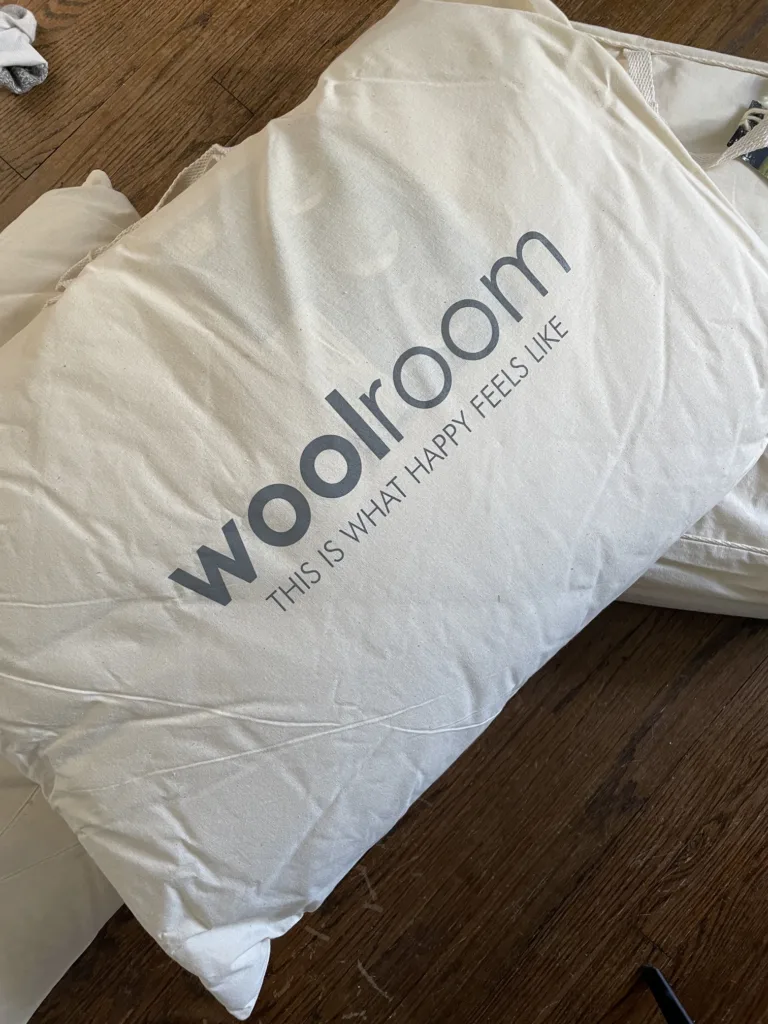
- Best for: Natural down alternative, breathablity
- Fill: 100% traceable British wool (10.3 oz/sq yd)
- Shell: 200 thread count cotton
- Weight: Medium (also comes in Warm for cold sleepers)
- Corner loops: Yes
- Care: dry clean only (switch to Woolroom’s washable line if you want machine-washable, the classic version isn’t]
- Price: $210-$290, but often on sale
When I first had the opportunity to test out a wool duvet from Woolroom, I had no idea what to expect because I’d never used one, or frankly heard much about them. I ended up bringing it to our old Vermont cabin to use in the primary bedroom, because I just assumed it would be super warm.
It was warm, but not quite as warm as I’d anticipated. After a few nights, what really struck me was how just-right it felt. Not too hot, not too cool. Which makes sense when you think about it, because wool is naturally temperature-regulating. The duvet stayed cozy when the cabin got cold at night, but never turned stuffy or clammy the way synthetic fill can start to feel. That breathability is wool’s real party trick: it wicks moisture away instead of trapping it.
On the cozy front, Woolroom’s insert is plush and snuggly, though it doesn’t have that lofty, cloud-like quality you get with down. It’s heavier, too. Overall, I’d say it feels comparable to a down-alternative comforter.
And speaking of down alternatives: that’s exactly where this insert shines. It’s perfect if you’re avoiding down but still want a natural fiber, rather than the synthetic fill you’ll find in most down-alternative options.
How I Tested the Best Duvet Inserts & Down Comforters
Most of these products were sent to me by brands or publicists hoping I’d write about them, either here or for one of the magazines and websites I write for. Others, though, including my number one pick, I bought myself, simply because I’d done the research and wanted them on my own bed.
Every duvet I mention here is one I’ve actually slept with on my own bed for at least two weeks, and in most cases a good deal longer. I’ve washed or dry-cleaned each one at least once and paid attention to how it holds up over time. When I test a duvet insert, I’m considering how warm and breathable it is, how it sounds (I really don’t like a lot of rustling when I’m trying to sleep!), how it drapes over the bed, and how well it stays put inside a duvet cover.

![The best Amazon home decor [2023] Plus how to find it](https://kaitlinmadden.com/wp-content/uploads/2022/08/home-decor-on-amazon.png)