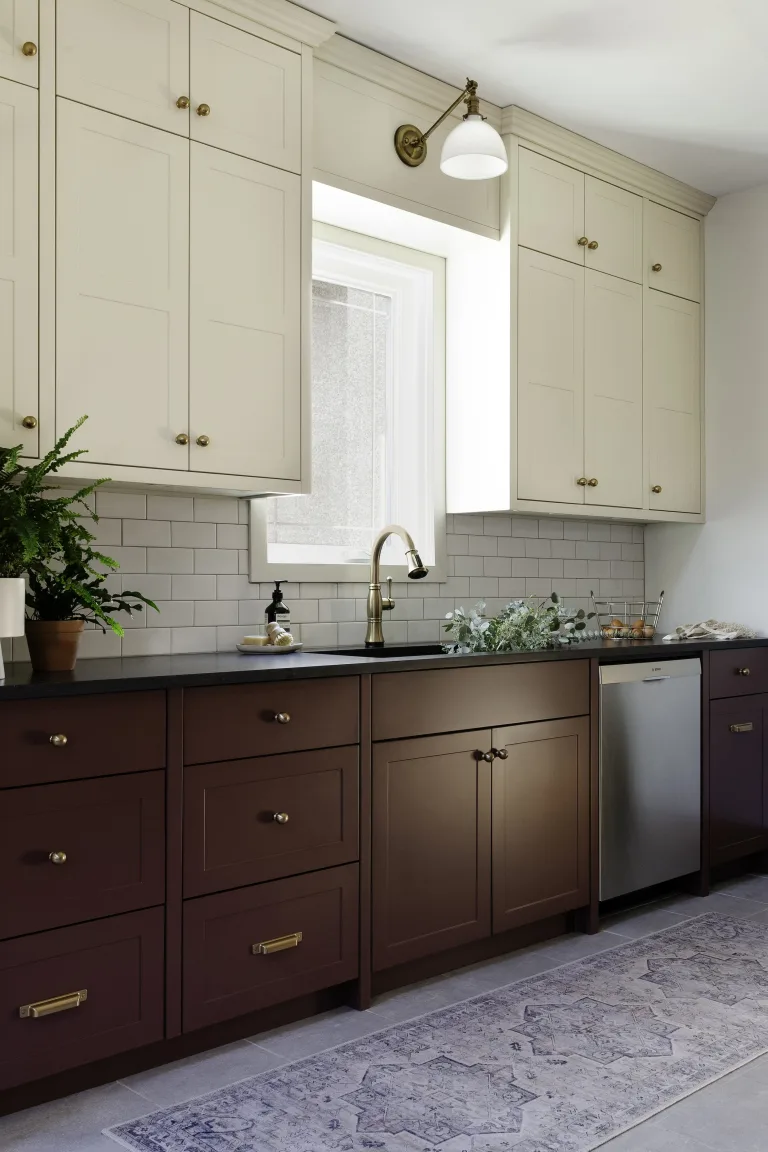
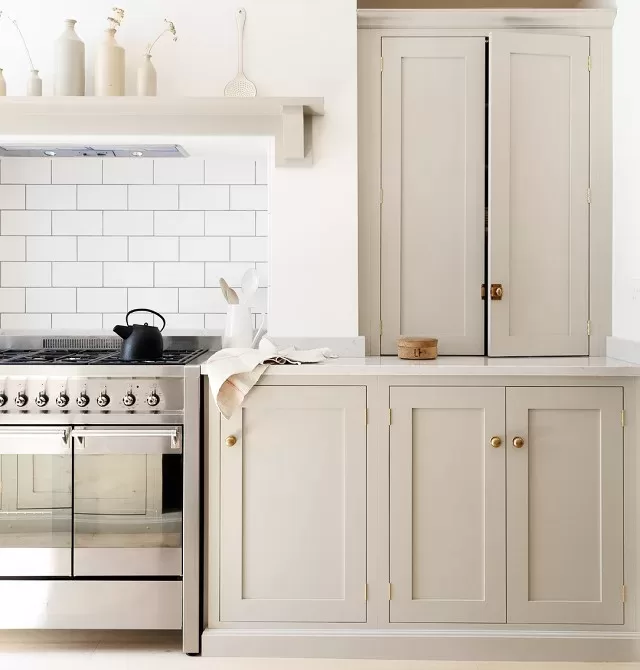
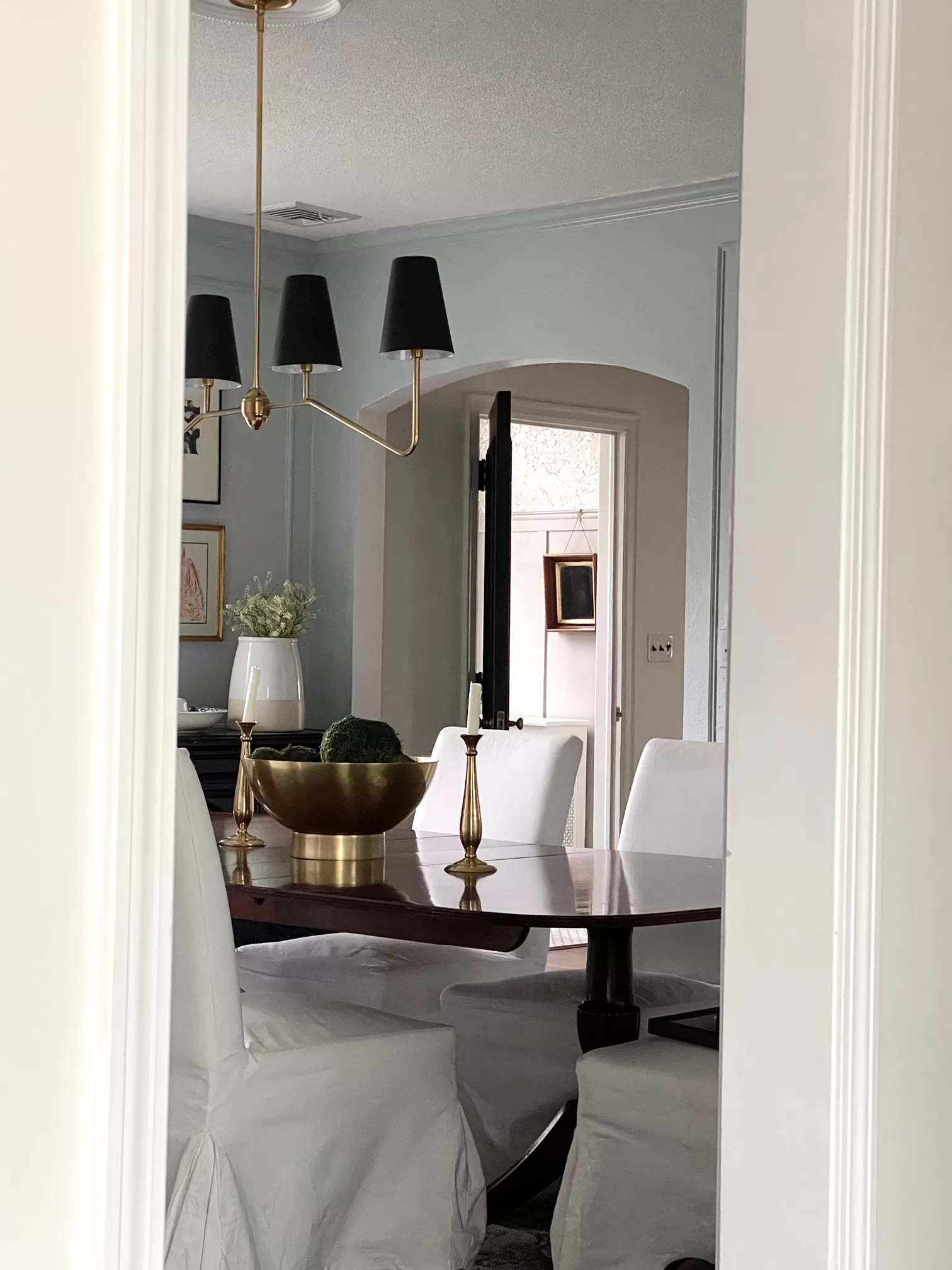
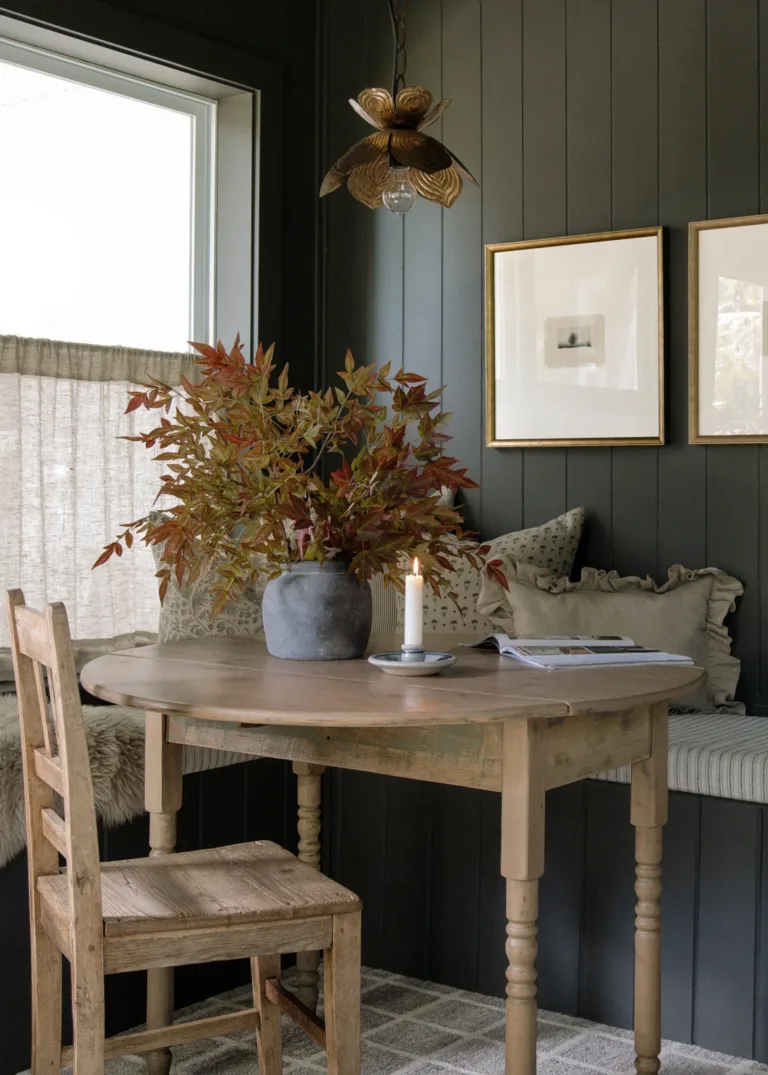
Sherwin-Williams Greek Villa vs. Alabaster: Which Is the Best Warm White?
If you’re looking for a bright white paint color with subtle warmth and depth, you’ve probably come across Sherwin-Williams Greek Villa and Sherwin Williams Alabaster. They’re two of the brand’s best-selling shades, and they also happen to be two of my favorite white paint colors. (I considered both for my primary bedroom, and ultimately one won out. I’ll share which one in a bit.)
These colors are popular for many of the same reasons. Both are warm whites that feel inviting without veering into beige or cream territory. As far as whites go, both shades are still pretty bright, but neither will give a room the stark feeling that can come with a cooler pick.
As you’ve probably noticed if you’ve seen both colors, they’re pretty similar, which makes choosing between them harder than you might expect.

Would you like to save this?
In the end, I went with Alabaster on my bedroom walls. It felt slightly softer in my space, which is north-facing. Greek Villa was a very close second, though, and I could easily see choosing it for a room that got different light or had different decor.
If you’re deciding between Sherwin-Williams Greek Villa and Alabaster, the winner will ultimately depend on the space you’re using it in, but here’s how the two colors compare, and the subtle differences that may make one a better fit for your room.
I always, always recommend sampling paint colors in a room before committing, since so much of how a paint color looks depends on context. I love Samplize peel-and-stick paint samples because they’re mess free and easy to move around a room.
Sherwin-Williams Greek Villa vs. Alabaster: Key Similarities and Differences

I’ll start with the short answer: Greek Villa and Alabaster are more alike than they are different. This isn’t one of those paint-color comparisons where one shade is clearly white and the other looks beige. If you saw Greek Villa and Alabaster in separate rooms, you might assume they were the same color.
As far as their similarities, both are warm, creamy whites with subtle yellow and beige undertones. Neither is a crisp, true white and neither should look stark or icy on the wall.
The main difference is that Greek Villa is slightly lighter and brighter than Alabaster. Greek Villa has an LRV (or Light Reflectance Value, which measures the paint color brightness on a scale of 0-100, with 100 being pure white). of 84, while Alabaster has an LRV of 82.

That two-point difference is visible when the samples are placed next to each other, but it isn’t dramatic. Greek Villa generally looks a little brighter and more luminous, while Alabaster has slightly more depth and a softer, more muted quality (these differences are subtle. So subtle)
Their undertones are also similar. Greek Villa can look a touch sunnier or creamier, while Alabaster tends to feel a bit more grounded. That small difference is ultimately why I chose Alabaster for my bedroom.
To sum it up:
- Choose Greek Villa if you want the brighter of the two and prefer a warm white that still reads fairly close to white.
- Choose Alabaster if you want a slightly softer, more muted warm white with a touch more depth.
Here’s a quick comparison:
| Sherwin-Williams Greek Villa | Sherwin-Williams Alabaster | |
|---|---|---|
| Color number | SW 7551 | SW 7008 |
| LRV | 84 | 82 |
| Overall appearance | Brighter, more luminous warm white | Softer, slightly more muted warm white |
| Undertones | Subtle yellow and beige | Subtle yellow and beige with a more subdued quality |
| Best for | Bright walls, open living spaces, cabinets and exteriors | Bedrooms, cozy living spaces, cabinetry and whole-house color schemes |
| Potential drawback | Can look creamier in warm light | Can look slightly dull in a dark, cool room |
| Brighter color | Yes | No |
| More grounded color | No | Yes |
Which Is Warmer: Greek Villa or Alabaster?

Both colors are warm, and I wouldn’t choose between them based on the on-paper warmth alone. In fact, your lighting and surrounding materials may ultimately have more impact on their appearance than the small difference between the colors themselves.
When placed side by side, Greek Villa can look slightly sunnier or creamier. Alabaster has similar warm undertones, but its added depth gives it a softer, more subdued appearance.
This is a very close comparison, though. Your flooring, window direction, artificial lighting and furniture can all affect which color looks warmer in a particular room.
Place either one next to a crisp white, such as Sherwin-Williams Extra White, and its creamy undertones will become much more noticeable. Pair it with natural wood, beige upholstery or other warm neutrals, and it may simply read as white.
Neither color would be my first choice if you want a crisp, almost colorless white. For that look, I would sample Sherwin-Williams Pure White or Extra White instead.
How Do Greek Villa and Alabaster Look in Different Lighting?

Lighting is especially important with white paint. The same warm white can look bright and fairly neutral in one room, then noticeably creamier or more subdued in another.
North-Facing Rooms

North-facing rooms receive cooler, grayer natural light. This can make white paint look flatter and more muted than it does on a paint card.
Both Greek Villa and Alabaster have enough warmth to help balance that cooler light. Of the two, I would start with Greek Villa if your main goal is to make the room feel as bright as possible. Its higher LRV gives it a slight advantage, and it may hold onto more of its white appearance in dim light.
Alabaster can also work beautifully in a north-facing room, especially if you want a soft, cozy effect. This ended up being why I chose it for my bedroom.
South-Facing Rooms

South-facing rooms receive warm natural light throughout much of the day. The general consensus is that south-facing light makes walls read warmer, but I find that to be true only when the light is indirect, like at sunrise or sunset.
In the middle of the day when the sun is strongest, I find that that most warm whites simply look brighter and more white. So, Greek Villa or Alabaster may end up looking like a bright white (still not cool or stark, though), in the middle of the day. This is good to know if you really want a white paint that preserves its warmth in any light, in which case I would go with something deeper, like SW White Duck, SW Creamy or SW Aesthetic White.
East-Facing Rooms
East-facing rooms receive warm, direct light in the morning and cooler light later in the day.

Both colors will look warmer and creamier in the morning. Greek Villa may look especially bright and sunny during this part of the day.
As the natural light cools in the afternoon, both will become more subdued. Alabaster may look slightly deeper, while Greek Villa should maintain a little more brightness.
West-Facing Rooms
West-facing rooms have cooler, flatter light in the morning, followed by intense warm light later in the day.
In the morning, Greek Villa will likely look like the brighter of the two, while Alabaster may appear more muted.
By late afternoon, both colors will look warmer and creamier. Greek Villa may take on a sunnier quality, while Alabaster will look rich, soft and cozy.
Which Is Better for a Dark Room?
Greek Villa is technically the better choice if your goal is to reflect as much light as possible. Its LRV is two points higher than Alabaster’s.
However, the difference isn’t large enough to turn a dark room into a bright one. Paint can reflect the light that enters a room, but it can’t create natural light.
In a dim room, Greek Villa will likely look like a warm off-white rather than a bright white. Alabaster may read as slightly deeper or more beige.
I would choose Greek Villa if I wanted the room to feel lighter and fresher. I would choose Alabaster if I wanted to lean into a softer, cozier feeling.
Your lightbulbs matter, too. Warm bulbs will bring out more cream and yellow in both colors, while cooler bulbs can make them look flatter or more neutral. In general, my advice it to always avoid cool or natural LED light bulbs, and go for warm ones that mimic incandescent light.
Can You Use Greek Villa and Alabaster Together?

Technically, yes, but really there’s enough contrast between them to make the combination worthwhile. The end result will most likely look as if the trim and walls were supposed to match but came from slightly different paint batches.
Is Greek Villa or Alabaster Better for an Exterior?
Both are popular exterior whites, but exterior sunlight will make them look lighter and brighter than they do indoors.
Greek Villa will generally read as the brighter option. It can look creamy or ivory in direct sunlight, particularly next to crisp white windows or trim.
Alabaster creates a soft white exterior that works especially well with warm stone, brick, stained wood and dark bronze or black accents.
If your home receives strong southern or western light, sample both colors on several sides of the house. A color that looks perfectly warm on the shaded north side may appear much creamier in direct afternoon sun.
You’ll also want to view the samples against fixed elements such as the roof, stonework, window frames and gutters. Those materials will have more influence on the final result than a two-point difference in LRV
Should You Choose Greek Villa or Alabaster?
I chose Alabaster for my bedroom, but this was a close decision.
Alabaster felt slightly softer and more grounded with the warm brown velvet bed, wood furniture and other neutral elements I was using. I wanted the room to feel layered and restful, not necessarily as bright as possible.
Greek Villa was a very close second. I would choose it over Alabaster in a darker room or in a space where I wanted a brighter, more luminous warm white.
Choose Greek Villa if:
- You want the slightly lighter and brighter color.
- Your room has limited natural light.
- You want a warm white that still reads fairly close to white.
- You’re painting an open-plan living space or kitchen.
- You want a soft exterior white with a more luminous appearance.
Choose Alabaster if:
- You want a slightly deeper and more muted warm white.
- Your room contains warm wood, aged brass, linen or brown upholstery.
- You want a bedroom or living room to feel soft and cozy.
- You prefer a more grounded white rather than the brightest option.
- You’re looking for a warm whole-house color that doesn’t feel stark.
The truth is, there isn’t a dramatic difference between Greek Villa and Alabaster. Greek Villa is slightly brighter, while Alabaster is slightly deeper and softer. Both are warm, versatile whites with similar creamy undertones.
Because the colors are so close, I wouldn’t choose between them from the paint cards alone. Order large peel-and-stick samples, place them next to your flooring and furniture, and check them in morning, afternoon and artificial light.
In my bedroom, that side-by-side comparison was what ultimately pushed me toward Alabaster, but Greek Villa was close enough that I would happily use it elsewhere in my home.